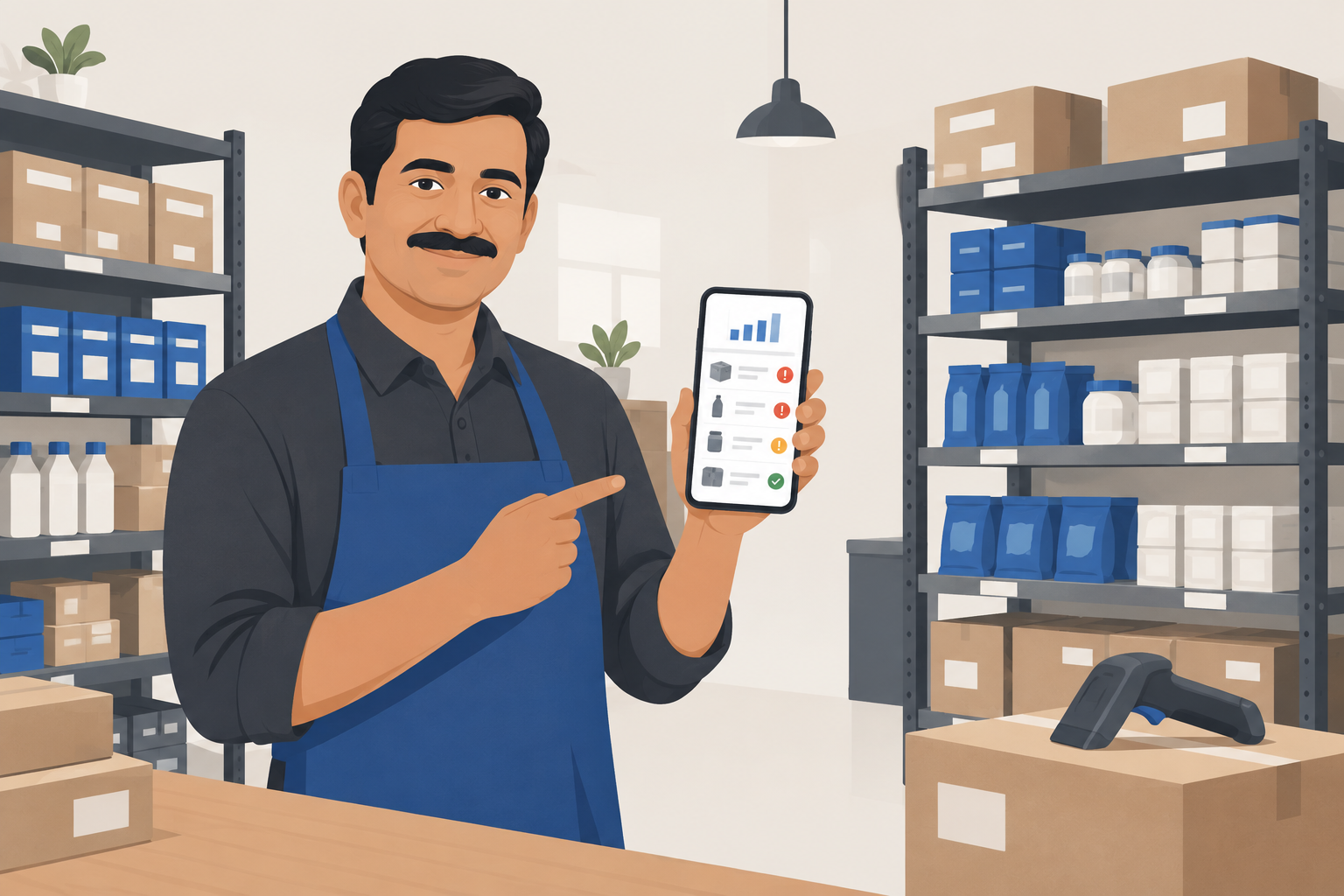
Key takeaways
- Pharmacy billing software adds batch, expiry, strip/loose sales, salt search and Schedule H1 records on top of normal GST billing.
- Since 22 September 2025 (GST 2.0), most medicines, including Ayurvedic and Homoeopathic, are taxed at 5%; 36 notified life-saving drugs are at 0%.
- Schedule H1 sales need a separate record with the doctor's name and address, the patient's name, the medicine and the quantity, kept for three years.
- Prices in India range from free apps to about ₹15,000 a year for a single store; desktop licences start around ₹8,000 plus yearly renewal.
- Test with your own medicines: time a real bill, import a distributor bill and check the H1 and GST reports before you pay.
A medical store is not like any other shop. You sell thousands of small items. Each one has a batch number and an expiry date. Some can only be sold with a doctor's prescription. And one wrong tax rate or one missing register entry can bring a notice from the GST office or the drug inspector.
That is why so many chemists are now looking for pharmacy billing software. About 1,300 people in India search for it every month. If you run a medical store, a pharmacy chain or a medicine wholesale business, this guide is for you.
Below we explain, in simple words, what pharmacy billing software does, which features you really need, the GST 2.0 and Schedule H1 rules it must follow, what it costs in 2026, and how to choose one without regret.
What Is Pharmacy Billing Software?#
Pharmacy billing software (also called medical store software or chemist software) is a computer or mobile app made for selling medicines. A normal billing app only makes invoices. A pharmacy app also understands how medicines work:
- Every item has a batch number, expiry date and MRP, and the same medicine can have different batches in stock at the same time.
- You sell in strips, loose tablets or full boxes, and the software converts the stock for you.
- It picks the oldest expiry first, so new stock does not get sold before old stock.
- It keeps the Schedule H1 register for you, without a separate notebook.
- It searches by brand name, salt (generic) name or company, so you can offer a substitute quickly.
In short, it is a GST billing app, a stock register, an expiry tracker and a compliance register, all in one.
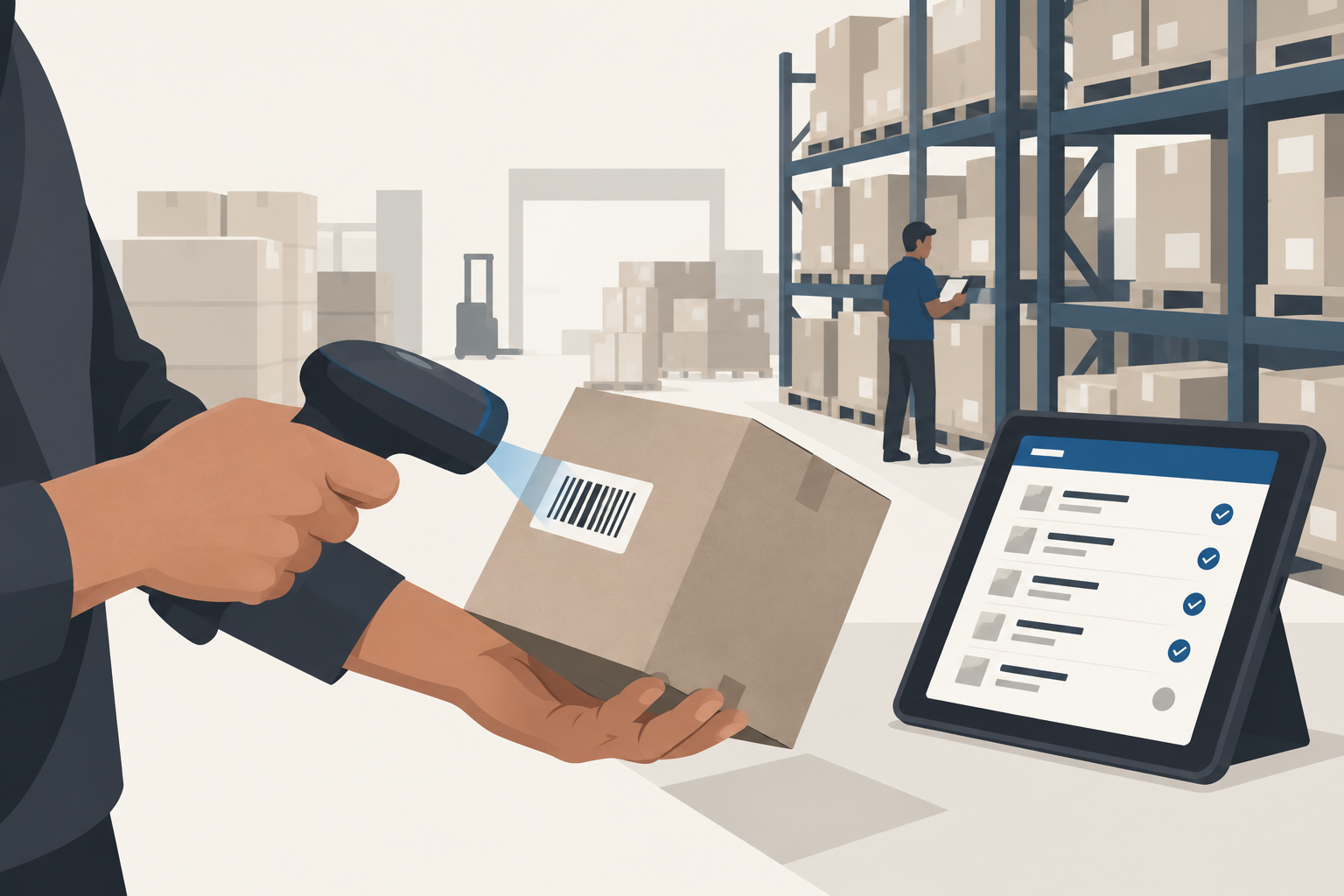
Why Chemists Are Switching in 2026#
1. Expiry loss is real money. Medicines that expire on the shelf are a straight loss. Most stores only find them during a yearly stock check. Good software warns you 60 to 90 days before expiry, so you can return the stock to the distributor or sell it first.
2. GST rates on medicines changed. Under GST 2.0, most medicines moved to new rates (details below). If your item list still has old rates, every bill is wrong.
3. Inspections need clean records. Drug inspectors can ask for your Schedule H1 records any day. Software keeps them complete and printable.
4. Customers expect speed. People want a quick bill, UPI payment and a bill on WhatsApp. A slow counter loses customers to the store next door or to online pharmacies.
GST 2.0: New GST Rates on Medicines#
From 22 September 2025, India moved to a simpler GST system called GST 2.0. For medical stores, the big change was this:
| Item | Old GST rate | New GST rate (from 22 Sep 2025) |
|---|---|---|
| Most medicines (tablets, syrups, injections) | 12% | 5% |
| Ayurvedic, Unani, Siddha and Homoeopathic medicines | 12% | 5% |
| 36 notified life-saving drugs (cancer, rare diseases) | 5% or 12% | 0% (Nil) |
| Bandages, gauze, surgical dressings | 12% | 5% |
| Some non-essential medical goods | 18% | Still 18% |
The old 12% slab is gone. Many older articles and old item lists still show 12% for Ayurvedic medicines. That is out of date.
What this means for you: Your pharmacy billing software must have the new rates mapped to the right HSN codes (mostly 3003 and 3004 for medicines). Check your top 50 items by hand once. And before you put any medicine at 0%, match the exact drug name against the government's notified list.
If you are a regular GST dealer (not composition), you can still claim input tax credit on the medicines you buy for resale. For more on GST bills in general, read our GST billing software guide.
Schedule H1: The Register Your Software Must Keep#
Schedule H1 was added to the Drugs and Cosmetics Rules in 2013. It covers some third and fourth generation antibiotics, anti-TB medicines and certain habit-forming drugs. The aim is to stop people from misusing antibiotics.
For every H1 sale, the chemist must:
- Sell only against a prescription from a registered doctor.
- Write the sale in a separate register with the doctor's name and address, the patient's name, the medicine name and the quantity sold.
- Keep these records for three years, ready for inspection.
Writing this by hand is slow, and entries get missed when the shop is busy. Good pharmacy billing software marks H1 items in your item list. When you bill one, it asks for the doctor and patient details right at the counter, saves the batch and bill number, and prints the H1 register in the right format whenever you need it.
Tip: Ask the vendor to show you the H1 report live during the demo. Also ask whether it handles Schedule X records, if you stock such drugs.
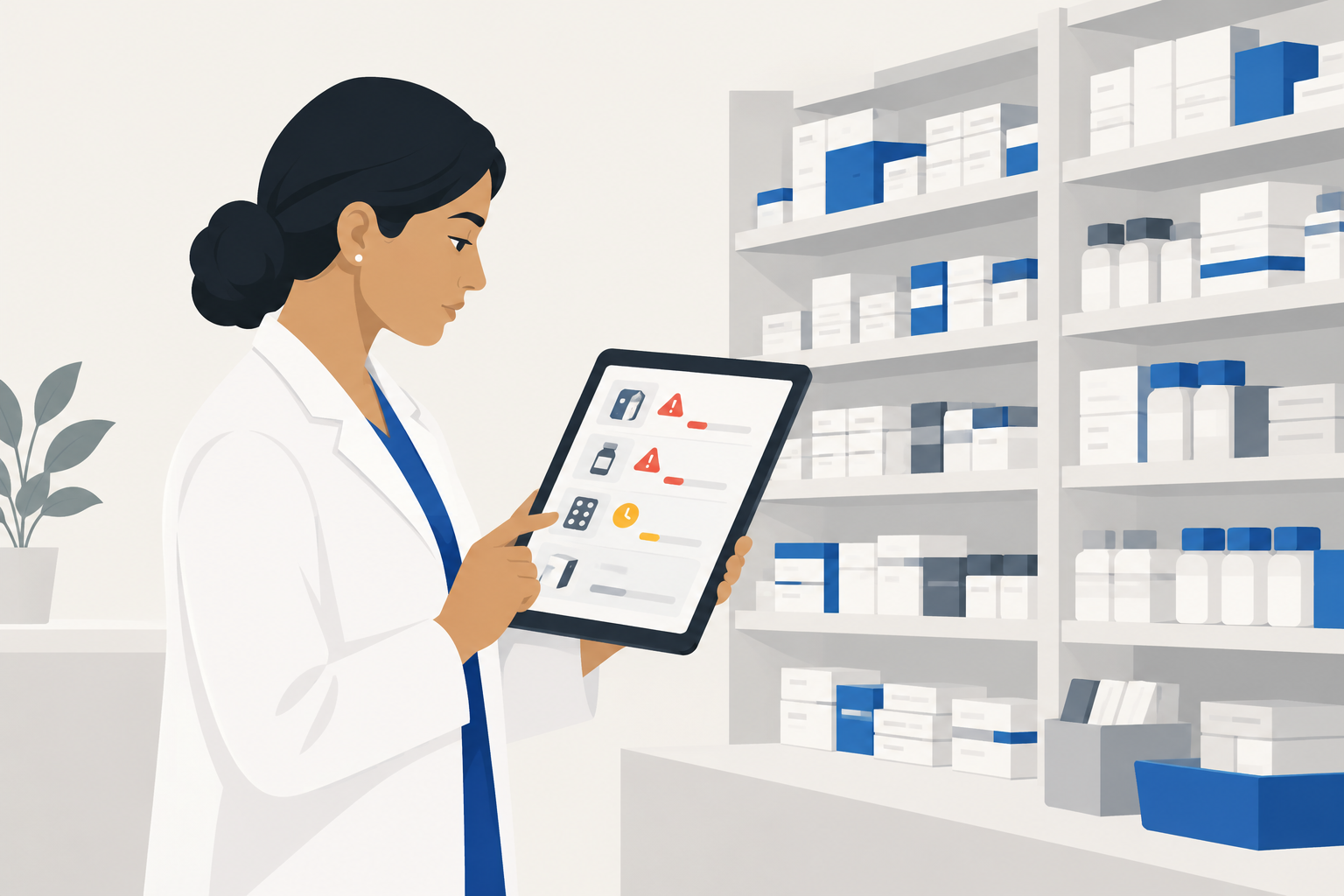
10 Must-Have Features in Pharmacy Billing Software#
Do not get lost in long feature lists. These ten matter most for an Indian medical store:
- Batch and expiry on every item. The software should pick the nearest-expiry batch by default (FEFO: first expiry, first out).
- Expiry alerts and expiry return list. A report of what will expire in the next 30, 60 or 90 days, grouped by distributor, makes returns easy.
- Strip and loose sale. Sell 4 tablets from a strip of 10 and the stock updates correctly.
- Salt (generic) search and substitutes. Type the salt name and see every brand you have in stock, with MRP and margin.
- Schedule H1 and narcotic registers. These are automatic, printable and complete.
- GST 2.0 rates and HSN codes. The correct rates are built in, and you can easily change one if the government changes it again.
- Fast purchase entry. You can import distributor bills from Excel or CSV instead of typing 80 lines by hand. This one feature saves hours every week.
- Barcode scanning. Most medicines now have barcodes, and scanning removes typing mistakes at the counter.
- Reorder and shortage list. It shows what is running low, based on how fast it sells.
- WhatsApp bills, UPI and refill reminders. It sends the bill on WhatsApp and reminds regular customers when their monthly medicine is due. This brings customers back.
Also check that the software has offline mode (billing must not stop when the internet goes down), daily backup and data export to Excel at any time.
For a deeper look at stock features, see our inventory management software guide.

Retail vs Wholesale Pharmacy Software#
The same brand often sells two different versions, so pick the right one.
Retail pharmacy software focuses on a fast counter: barcode billing, loose sale, H1 register, customer history, WhatsApp bills and refill reminders.
Wholesale (distribution) pharmacy software focuses on bulk trade: multiple price lists, schemes (like 10+1 free), credit limits for retailers, salesman orders from a mobile app, e-way bills, e-invoicing and outstanding reports.
If you do both retail and wholesale from one store, ask for one system that handles both. Running two separate apps means two stock lists that never match.
Pharmacy Billing Software Price in India (2026)#
Prices change often, so here are realistic ranges, not exact quotes. Most prices are plus 18% GST. Always check the vendor's own pricing page.
| Type | Typical cost | Good for |
|---|---|---|
| Free plans and free apps | ₹0 | Very small stores, 1 user, basic bills |
| Cloud or mobile pharmacy apps | About ₹3,000 – ₹15,000 a year | Single medical store |
| Desktop licence (one-time) | From about ₹8,000 for a basic single-user edition, plus a yearly renewal fee | Stores whose CA works on desktop software |
| Multi-user, multi-branch plans | About ₹15,000 – ₹50,000+ a year | Pharmacy chains and wholesalers |
| Custom pharmacy system | Usually from ₹1.5 lakh, plus maintenance | Chains, hospital pharmacies, online + offline stores |
For example, Marg ERP's basic single-user edition is listed at around ₹8,100 one-time, with a yearly renewal (ARC) for updates. Popular names in India include Marg, eVitalRx, Vyapar, Busy and GoFrugal. Each one fits a different kind of store, so compare them with your own products.
Watch out for "free download full version with crack". Many people search for cracked pharmacy software. Please avoid it. Cracked software gets no GST rate updates, can hide viruses, can lose all your data, and is illegal to use. One lost month of sales data costs far more than a licence.
Before you pay, ask:
- What does a second user or a second computer cost?
- Is the H1 register included, or only in a higher plan?
- What is the renewal price in year two?
- Is WhatsApp billing or an online ordering app an extra charge?
- Can I export all my data if I leave?

How to Choose the Right Pharmacy Billing Software: 6 Simple Steps#
- Decide retail, wholesale or both. This decides which edition you need.
- Pick 3 tricky test cases. For example, a loose-tablet sale, an H1 medicine with a prescription, and a medicine with two batches at different MRPs.
- Shortlist three apps that clearly handle all three test cases.
- Do a live test at your counter. Make a real 5-item bill with a scanner and a UPI + cash split payment, and time it. It should take under 30 seconds.
- Import one real distributor bill. If purchase entry is slow, you will hate the software within a month.
- Show the GST and H1 reports to your CA. If your CA is happy, filing and inspections will be smooth.
For a general buying checklist, read how to choose billing software for your shop.
Common Mistakes to Avoid#
- Keeping old 12% GST rates on medicines after GST 2.0.
- Not entering batch and expiry at purchase time, which makes expiry alerts useless.
- Selling H1 medicines without recording them because the counter is busy.
- Mixing up loose and strip stock, so the computer stock never matches the shelf.
- No backup. A broken computer should not mean three years of lost H1 records.
- Buying the cheapest app without testing purchase import and the expiry return report.
When You Need More Than a Ready-Made App#
Ready-made pharmacy billing software is the right choice for most single medical stores. But a custom system starts to make sense when you:
- Run several branches and want one shared stock list and central purchasing.
- Run a hospital pharmacy that must link to patient bills. See our hospital management software guide.
- Want your own online ordering app or website for home delivery, linked to live stock.
- Supply clinics and retailers and need a salesman ordering app.
How Larwell Can Help#
At Larwell Technologies, we build and support billing and POS systems for shops, medical stores, wholesalers and distributors in Bokaro, across Jharkhand and all over India. Larwell POS gives you GST-ready billing, stock and an online store on one shared stock list. For pharmacy chains and hospital pharmacies, we also build custom systems with batch, expiry and H1 records built in.
Not sure which pharmacy billing software fits your store? Tell us how your store works and we will give you an honest suggestion, even if the answer is a ready-made app.
Final Word#
Good pharmacy billing software is not about a fancy screen. It is about the right GST rate on every bill, no expired stock sitting on your shelf, a complete H1 register when the inspector walks in, and a counter that moves fast. Test with your own medicines, check the GST 2.0 update, ask to see the H1 report, and make sure you can always take your data with you.