Key takeaways
- GST billing software creates correct GST invoices, splits CGST/SGST/IGST automatically and prepares GSTR-1 and GSTR-3B reports.
- Since 22 September 2025, GST 2.0 slabs are 0%, 5%, 18% and 40% — make sure your software and item list use the new rates.
- E-invoicing is compulsory once turnover crosses ₹5 crore in any year since 2017-18; businesses at ₹10 crore+ must report e-invoices within 30 days.
- Prices range from free apps to about ₹9,000 a year for plans with e-invoicing; always check per-user fees and renewal price.
- Test with your own products, time a real bill and export your data before you pay.
If you run a shop, a wholesale business or a small service company in India, you make bills every day. And every bill must follow GST rules. One wrong tax rate, one missing GSTIN or one skipped invoice number can mean a notice, a penalty, or a customer who cannot claim input tax credit.
GST billing software solves this. It makes correct GST bills in seconds, keeps your records safe, and gives your CA ready reports for filing returns. Around 10,000 people in India search for it every month, so you are not alone in looking.
This guide explains everything in simple words: what GST billing software does, which features you really need, what changed with GST 2.0, when e-invoicing applies to you, and what it costs in 2026.
What Is GST Billing Software?#
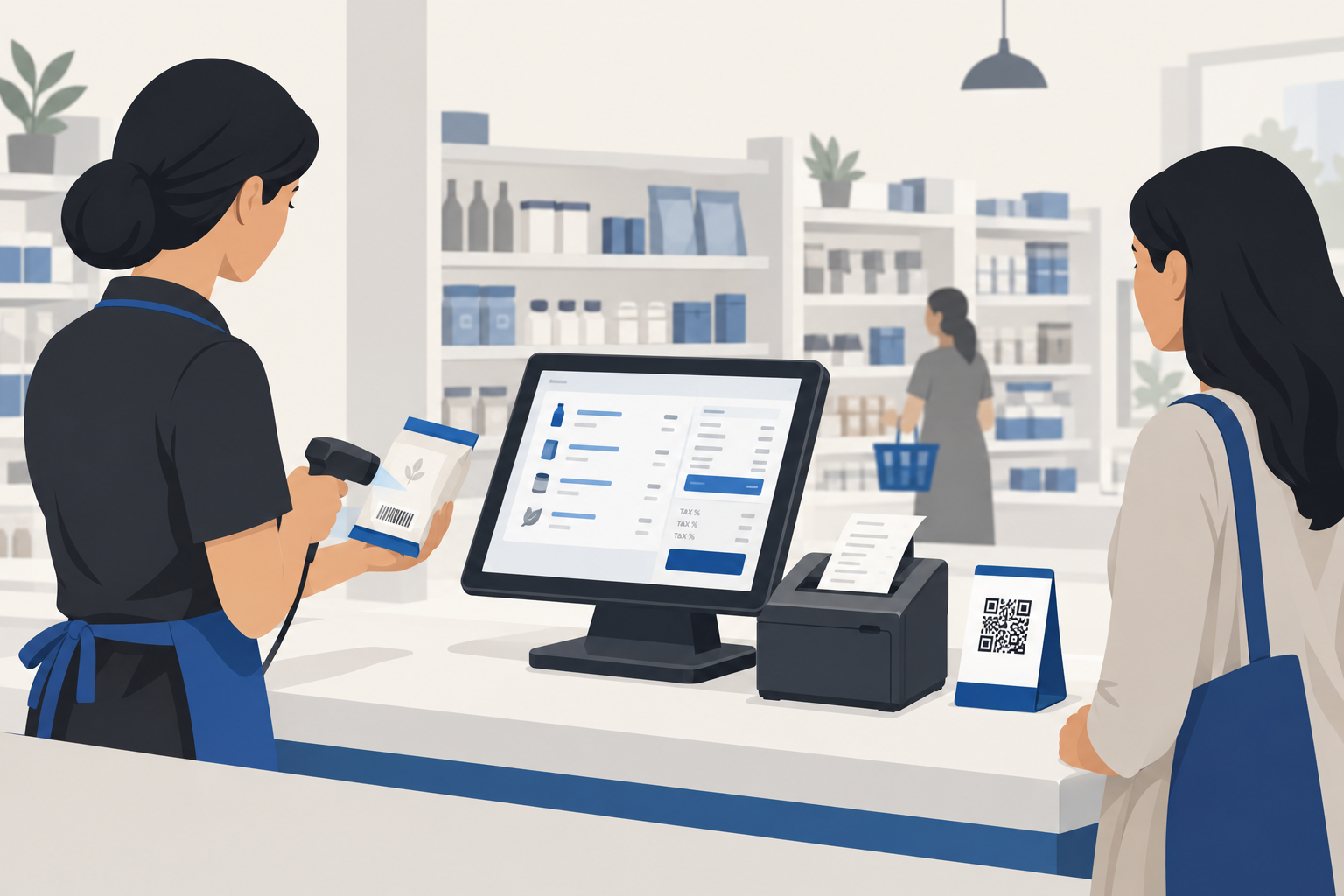
GST billing software is a computer or mobile app that creates tax invoices as per GST rules. You select the customer and the items, and the software does the rest:
- Picks the right HSN or SAC code and GST rate for each item
- Splits tax into CGST + SGST (same state) or IGST (other state) automatically
- Gives every bill a unique, serial invoice number
- Prints the bill, or sends it as a PDF on WhatsApp or email
- Saves every sale so you can make GSTR-1 and GSTR-3B reports later
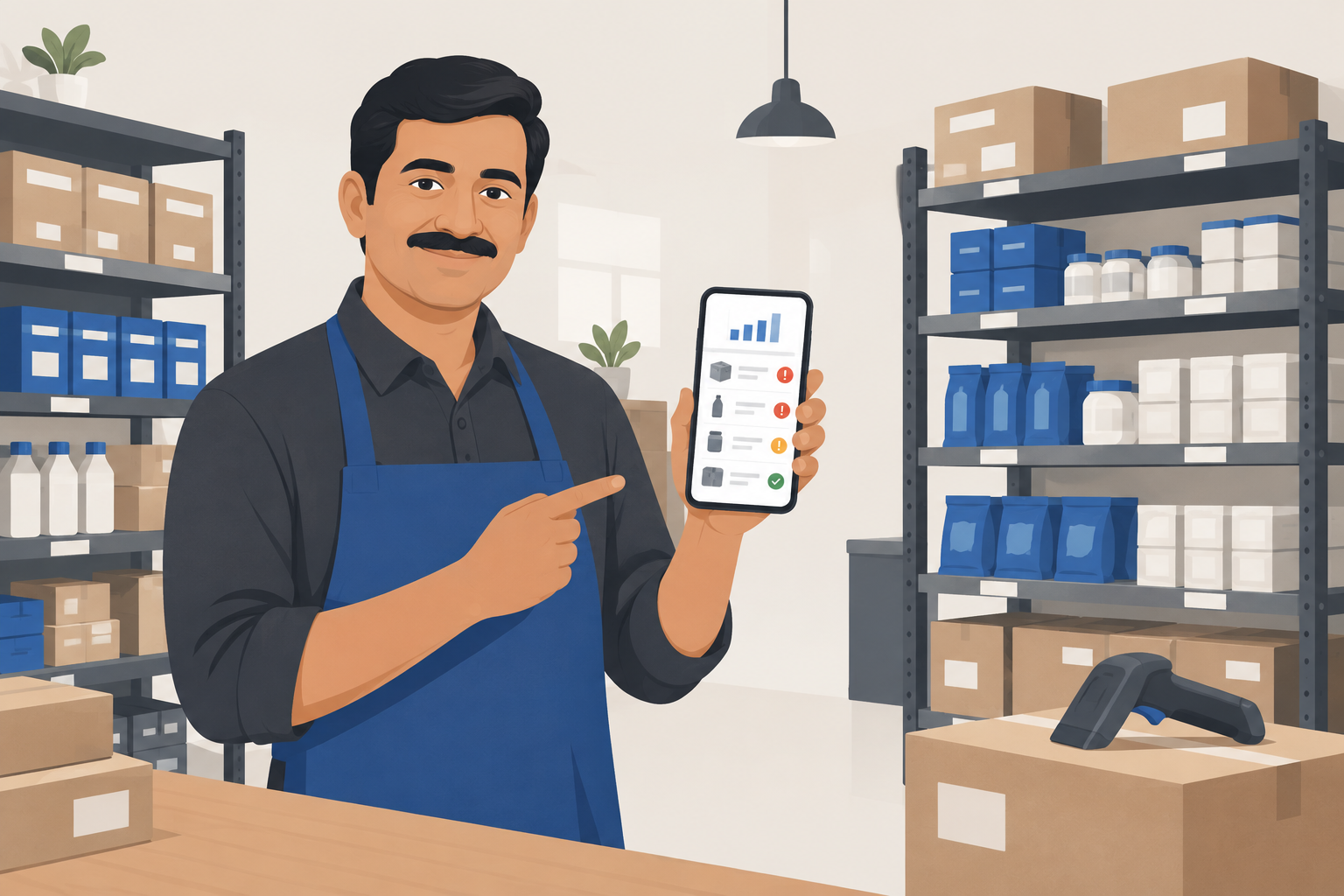
Most GST billing apps also track stock, payments due and daily sales. So one tool replaces your bill book, your stock register and part of your accounts work.
Why Small Businesses Are Switching in 2026#
Three big changes have pushed more shops away from handwritten bills:
- GST rates changed. Many items moved to new slabs under GST 2.0 (more on this below). Remembering every new rate by hand is hard and mistakes are easy.
- Buyers want proper invoices. B2B customers need your correct GSTIN and invoice details to claim input tax credit. A messy bill can cost you a customer.
- Digital payments and WhatsApp. Customers pay by UPI and expect a bill on their phone, not just on paper.
Good software also saves real time. A bill that takes two minutes to write by hand takes about 10 seconds on a billing screen with a barcode scanner.
GST 2.0: Why Your Software Must Be Updated#
From 22 September 2025, India moved to a simpler GST structure under GST 2.0. The main slabs are now 0%, 5%, 18% and 40%. The old 12% and 28% slabs were mostly removed:
| Old rate | Where most items went |
|---|---|
| 12% | Most items moved down to 5% |
| 28% | Most items moved down to 18% |
| 28% + cess (luxury and "sin" goods) | Moved to the new 40% slab |
| 5% and 18% | Still the main slabs |
For example, items like hair oil, soap, toothpaste, butter, ghee and packaged namkeen moved to 5%, while ACs moved from 28% to 18%. Aerated drinks and tobacco went up to 40%.
What this means for you: Your billing software must have the new rates mapped to the right HSN codes. If your software (or your old item list) still uses 12% or 28% for items that changed, every bill is wrong. Ask your vendor to confirm the GST 2.0 update, and check your top 20 items by hand once.
E-Invoicing: Does It Apply to You?#
E-invoicing means your B2B invoice is registered on the government's Invoice Registration Portal (IRP). The portal gives it a unique IRN and a QR code. Without these, a covered business's B2B invoice is not a valid tax invoice.
Here are the current rules in simple words:
- ₹5 crore rule: E-invoicing is compulsory if your aggregate turnover (all GSTINs under one PAN, across India) crossed ₹5 crore in any financial year from 2017-18 onwards. This limit has been in force since 1 August 2023.
- Once in, always in: If you crossed ₹5 crore even once, you must keep doing e-invoices, even if sales fall later.
- 30-day rule: Since 1 April 2025, businesses with turnover of ₹10 crore or more must report each e-invoice within 30 days of the invoice date. After that, the portal blocks it.
- It may go lower: The limit has been reduced many times since 2020, and there is talk of lowering it further.
Our advice: Even if you are below ₹5 crore today, choose GST billing software that supports e-invoicing and e-way bills. Moving your full sales history to new software later is painful.

10 Must-Have Features in GST Billing Software#
Do not get lost in long feature lists. These ten matter most for a small Indian business:
- GST-ready invoice format — GSTIN, HSN/SAC, place of supply, CGST/SGST/IGST split, all fields in place.
- Updated GST 2.0 rates — with an easy way to change a rate if the government changes it again.
- Fast counter billing — barcode scanner support and keyboard shortcuts. Test it: a five-item bill should take under 20 seconds.
- GSTR-1 and GSTR-3B reports — ready to export in Excel or JSON for your CA or the GST portal.
- E-invoice and e-way bill — one-click IRN and QR generation, even if you need it only later.
- Stock tracking — auto stock deduction, low-stock alerts, and batch or expiry for medicines and food. See our inventory management software guide.
- Credit notes and returns — proper credit notes linked to the old invoice, not a fresh negative bill.
- Payment tracking — who paid, who owes, and payment reminders on WhatsApp.
- Offline mode — billing should not stop when the internet goes down.
- Data export and backup — your data in Excel/CSV, any time, without asking support.
If you are a composition dealer, check that the software makes a "Bill of Supply" instead of a tax invoice, since composition dealers cannot charge GST separately on bills.

GST Billing Software Price in India (2026)#
Prices change often, so here are realistic ranges instead of one number. All prices are approximate, usually plus 18% GST. Always check the vendor's own pricing page.
| Type | Typical cost | Good for |
|---|---|---|
| Free plans and free apps | ₹0 | Very small shops, 1 user, basic bills |
| Basic mobile/cloud billing apps | About ₹800 – ₹3,500 a year | Single shop, GST bills + stock |
| Plans with e-invoice, multi-user, POS | About ₹6,000 – ₹9,000 a year | Growing shops, wholesalers, B2B sellers |
| Desktop licence (one-time) | From about ₹8,000 – ₹22,500, plus yearly renewal for updates | Businesses whose CA works on desktop accounting |
| Custom POS / billing system | Usually from ₹1.5 lakh, plus maintenance | Chains, unusual workflows, multi-branch |
Popular names in India include Vyapar, myBillBook, TallyPrime, Zoho Books, Busy and Marg. Each fits a different type of business, so compare them with your own products.
Watch for hidden costs. Before you pay, ask:
- Is e-invoicing in my plan, or only in a higher plan?
- What does a second user or second device cost?
- What is the renewal price in year two?
- Is WhatsApp billing or an online store an extra charge?
- Can I export all my data if I leave?
Free vs Paid GST Billing Software#
Free GST billing software is fine to start. It is a good choice if you make a few bills a day, sell from one counter and work alone.
Move to a paid plan when:
- You need more than one user (for example, a staff member at the counter)
- You sell B2B and need e-way bills or e-invoices
- You need stock alerts, batches or multiple godowns
- You want reliable support when something goes wrong at month end
A paid plan of ₹3,000–₹6,000 a year often costs less than one month of a CA fixing billing mistakes.
How to Choose the Right GST Billing Software: 6 Simple Steps#
- List your business type. Retail counter, wholesale, restaurant, pharmacy, services? Each needs different features.
- Write down your 3 hardest items. Items with sizes, batches, loose weight or mixed GST rates on one bill.
- Shortlist three apps that clearly handle those items.
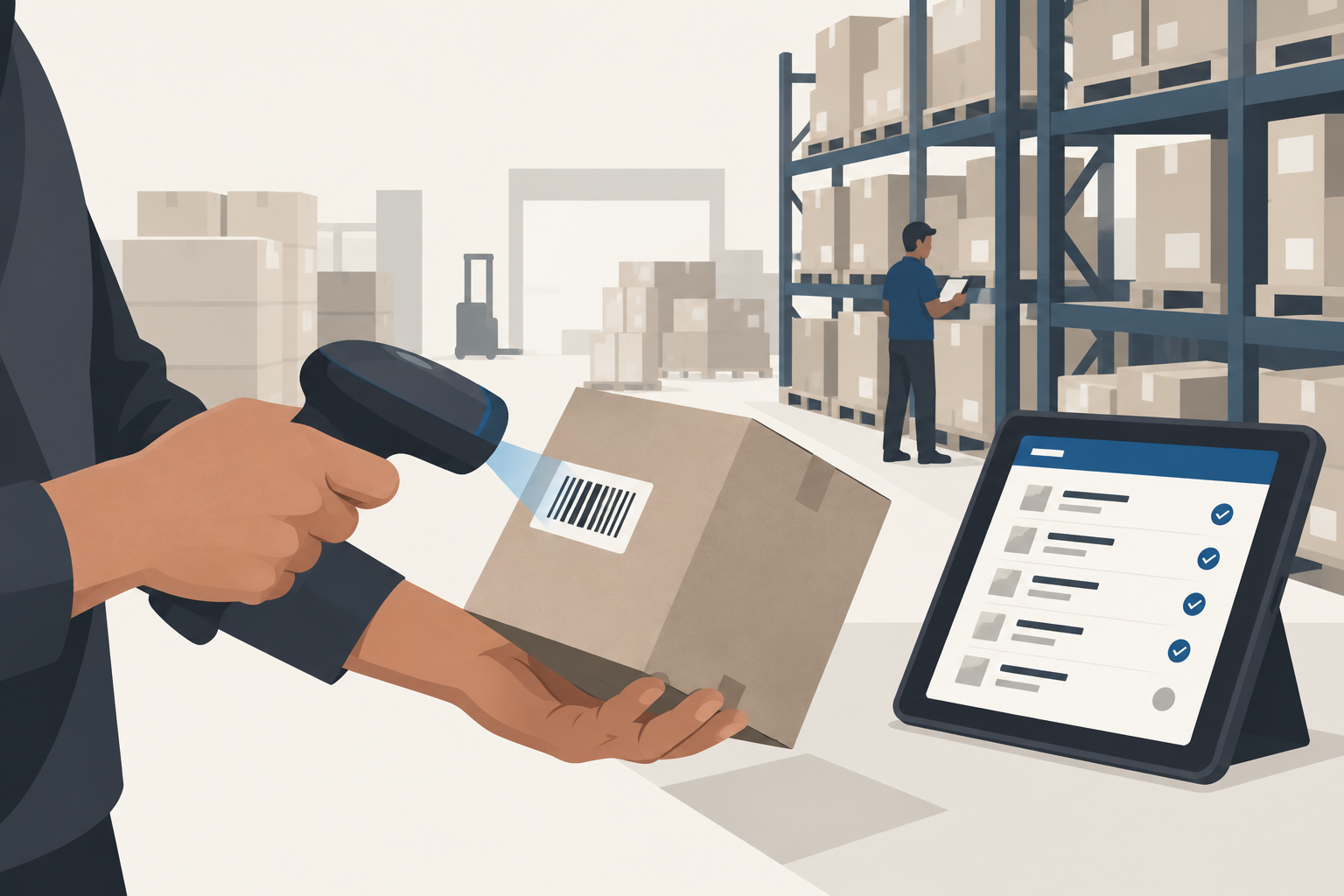
- Do a live test. Make a real 5-item bill with a scanner, a discount and a UPI + cash split payment. Time it.
- Show the GSTR-1 report to your CA. If your CA is happy with the format, filing will be smooth.
- Export your data once before paying. If you cannot open the file, do not buy.
For a deeper buying checklist, read our guide on how to choose billing software for your shop.
Common GST Billing Mistakes to Avoid#
- Using old GST rates after GST 2.0 — check your item list today.
- Wrong place of supply, which puts CGST/SGST on an interstate sale that needs IGST.
- Breaking invoice number series or reusing numbers.
- Missing the buyer's GSTIN on B2B bills, so they lose input tax credit.
- No backup. A broken laptop should not mean lost bills.
- Ignoring e-invoicing after crossing ₹5 crore turnover.
When You Need More Than a Billing App#
Off-the-shelf GST billing software is right for most small businesses. But if you run several branches, sell online and offline, or manufacture as well as sell, you may need one system that joins billing, stock and accounts. Our ERP software for small business guide explains when that step makes sense.
How Larwell Can Help#
At Larwell Technologies, we build and support billing and POS systems for shops, wholesalers and distributors in Bokaro, Jharkhand and across India. Larwell POS gives you GST-ready billing, stock and an online store on one shared stock list, so your counter and website never disagree.
Not sure which GST billing software fits your business? Tell us what you sell and we will give you an honest suggestion, even if the answer is a free app.
Final Word#
GST billing software is no longer a luxury. With GST 2.0 rates, e-invoice rules and customers paying on UPI, the right app saves time, avoids penalties and keeps your CA happy. Start with your real needs, test with your own products, check the GST 2.0 update, and pick software that can grow into e-invoicing. Your future self will thank you at return-filing time.