Key takeaways
- Hospital management software joins registration, OPD, IPD, pharmacy, lab and billing in one system.
- In 2026, ready-made plans in India start around ₹1,000–₹5,000 a month for clinics; the government's e-Sushrut@Clinic costs ₹499 a month for up to five users.
- A custom system for a 10–30 bed hospital usually costs ₹6–15 lakh and takes 3–6 months.
- ABDM and ABHA support is no longer optional for any hospital that works with Ayushman Bharat (PM-JAY).
- Choose by your daily workflow and data ownership, not by the longest feature list.
Walk into most small hospitals or nursing homes in India and you will see the same thing. Patient files in steel cupboards. Bills written by hand. Medicine stock counted in a register. A receptionist who knows everything — until she goes on leave.
This worked for years. But in 2026, three things have changed. Patients want online appointments and digital reports. Insurance and Ayushman Bharat claims need clean records. And the government's digital health mission (ABDM) now expects hospitals to keep records digitally and link them to each patient's ABHA health ID.
That is why so many hospital owners are now searching for hospital management software. This guide explains it in simple words — what it does, what it costs in India, and how to choose one without wasting money.
What Is Hospital Management Software?#
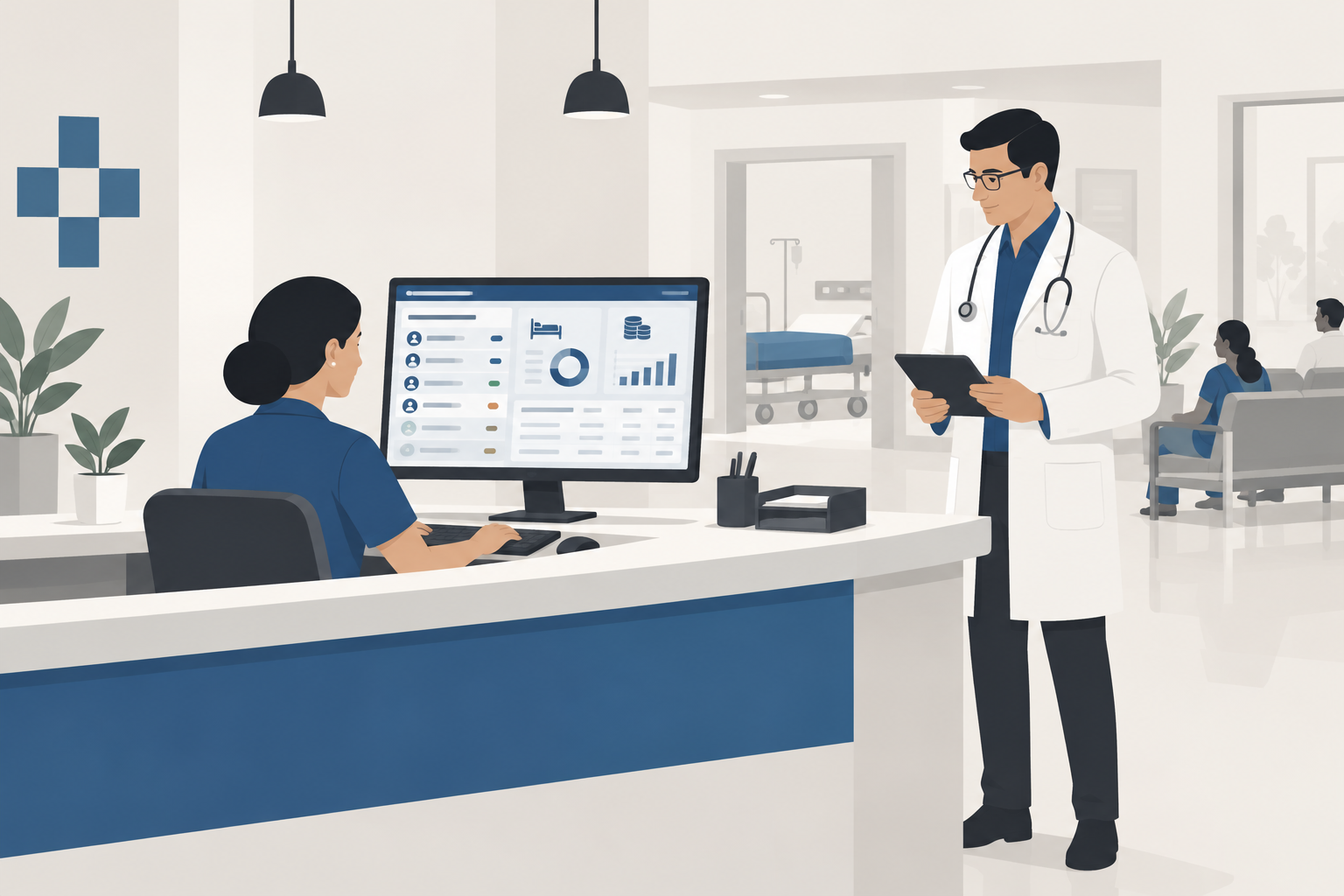
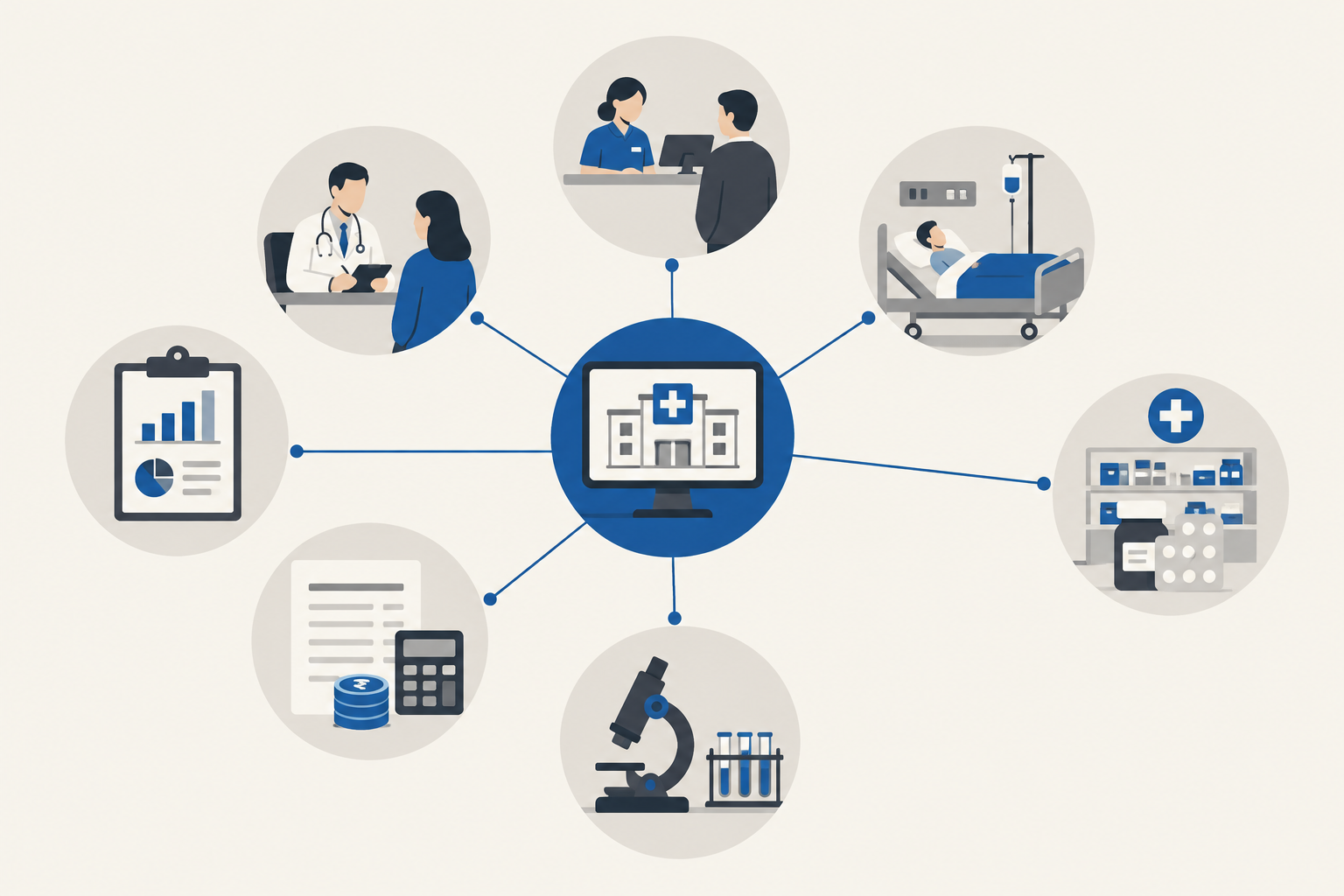
Hospital management software (also called HMS or HMIS) is one system that runs the daily work of a hospital or clinic. Instead of separate registers, Excel sheets and billing apps, everything sits in one place.
When a patient arrives, the receptionist registers them once. The doctor sees the same record in the OPD. If the patient is admitted, the bed, the nursing notes, the medicines and the lab tests all attach to that one record. At discharge, the bill is already ready.
Think of it as the hospital's central brain. Every department writes into it, and every department reads from it.
Main Modules You Will See#
Most systems are built from modules. You do not need all of them on day one.
- Patient registration — one record per patient, searchable by name, phone or ABHA number.
- Appointments and OPD — doctor schedules, token queue, prescriptions and visit history.
- IPD (admissions) — bed allotment, ward transfers, nursing notes and discharge summary.
- Billing — GST-ready bills, advance payments, packages, insurance and TPA claims.
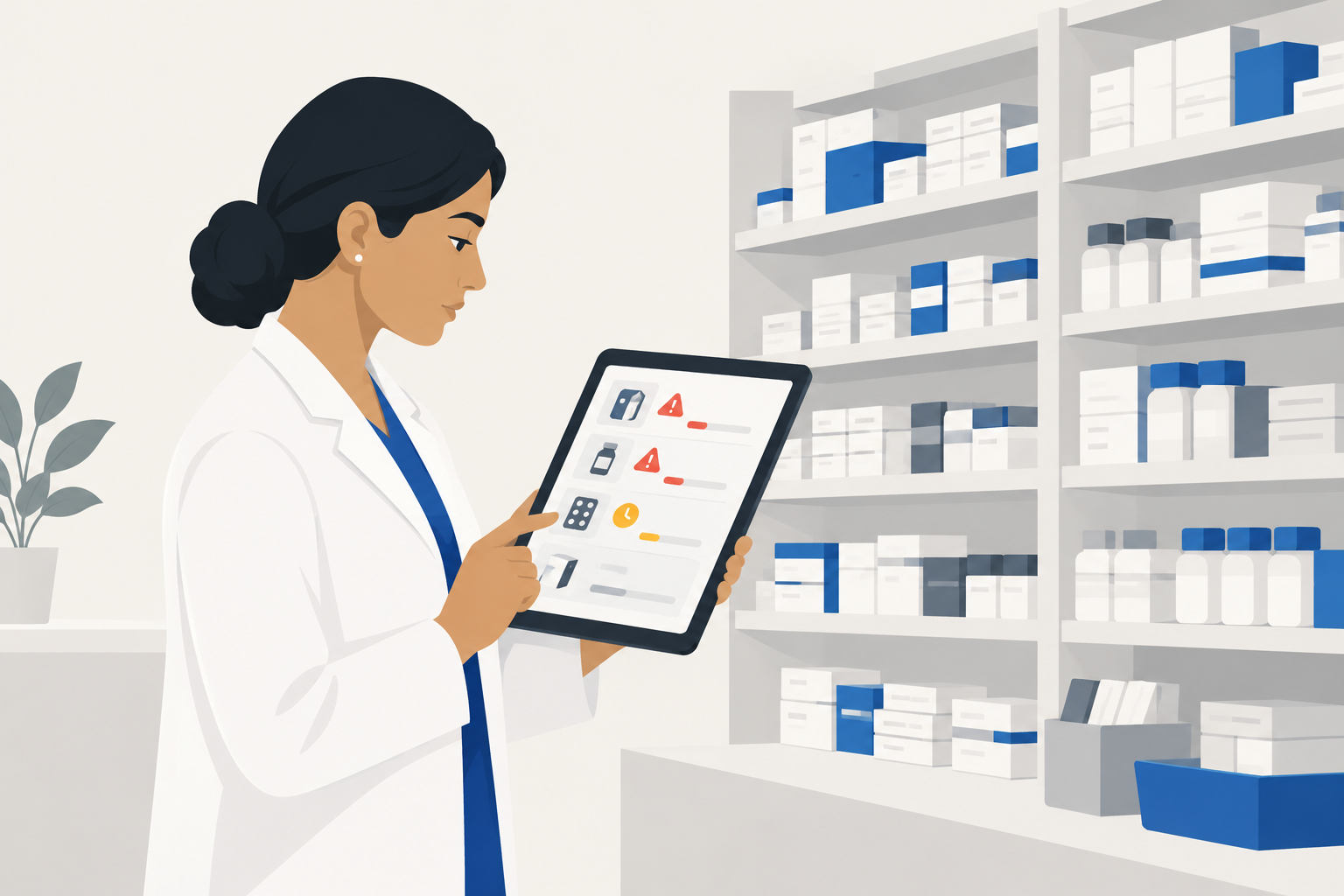
- Pharmacy — stock, batch numbers, expiry alerts and sales linked to prescriptions.
- Laboratory and radiology — test orders, sample tracking and reports sent on WhatsApp or SMS.
- Inventory — consumables, surgical items and purchase orders.
- Reports — daily collection, doctor-wise revenue, bed occupancy and government reporting.
- Staff and HR — roles, attendance and who can see what.
A single-doctor clinic usually needs only registration, OPD, billing and maybe pharmacy. A 50-bed hospital will need almost everything.
Why Small Hospitals Are Moving Now#
1. Less money leaks. When pharmacy sales, lab tests and room charges all go into the same bill automatically, items are not "forgotten" at discharge. For many hospitals this alone pays for the software.
2. Faster patient flow. Registration takes seconds for returning patients. Doctors see past visits on screen instead of asking the patient to bring old files.
3. Easier insurance and PM-JAY claims. Claims need clean, dated records. A system that stores them properly saves days of paperwork.
4. The owner can see the hospital from anywhere. Collections, occupancy and pending bills show up on a phone — useful if you run more than one centre.
5. ABDM is no longer "later". More on this below.
ABDM, ABHA and Why Your Software Must Support Them#
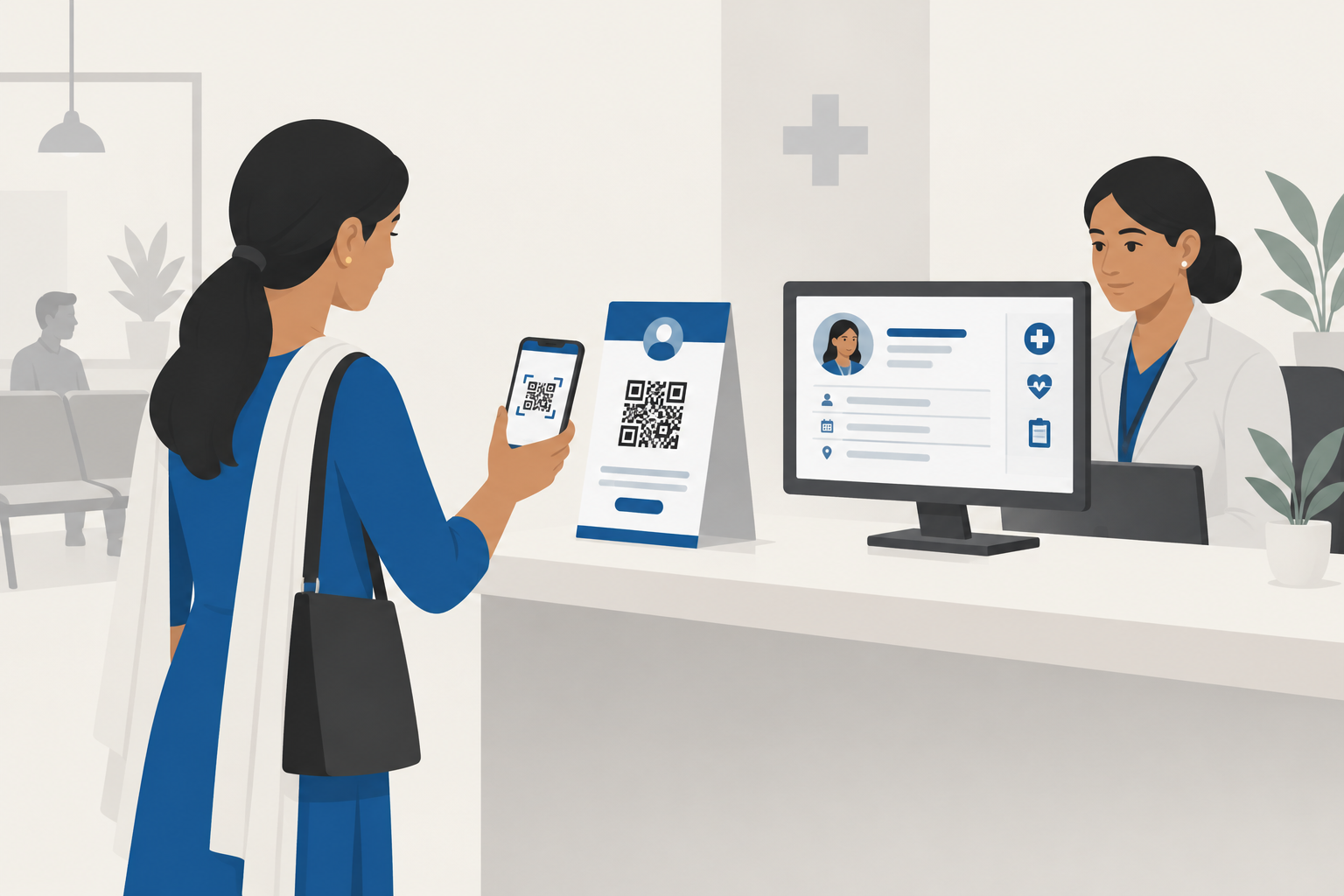
The Ayushman Bharat Digital Mission (ABDM) is the government's plan to connect patients, hospitals, labs and insurers on one digital health network. By May 2026, more than 88 crore (880 million) ABHA health IDs had been created — so a large share of your patients already have one.
ABDM works in stages, called milestones:
- M1 — creating or verifying a patient's ABHA ID at your counter.
- M2 — linking the records you create (prescriptions, reports, discharge summaries) to that ABHA ID.
- M3 — your doctors viewing a patient's past records from other hospitals, with the patient's consent. This is where the real value is.
Why does this matter for software? More than 36,000 hospitals are empanelled under Ayushman Bharat PM-JAY, and the software that runs them is now expected to support ABDM. State health agencies have started following up with hospitals that have not begun. If your current software cannot do this, you will feel the pressure soon.
Simple rule: before you buy any hospital management software in 2026, ask the vendor to show ABHA creation and record linking working live — not just a line on a brochure.
What Does Hospital Management Software Cost in India (2026)?#
Prices vary widely, so here is an honest range.
| Option | Typical cost | Good for |
|---|---|---|
| Government e-Sushrut@Clinic | ₹499/month (up to 5 users) | Small OPD clinics, PHCs |
| Ready-made SaaS (basic) | ₹1,000 – ₹5,000/month | Single-doctor and small clinics |
| Ready-made SaaS (hospital) | ₹15,000 – ₹80,000/month | 20–100 bed hospitals |
| Custom-built system | ₹6 – 15 lakh one-time | 10–30 bed hospitals with special workflows |
| Large custom / enterprise | ₹18 lakh and above | Multi-speciality and chains |
A few notes on these numbers:
- The government option is real. In June 2026, the Health Ministry launched e-Sushrut@Clinic, a simple cloud system built by C-DAC for small clinics and private OPDs. It costs ₹499 a month for up to five users and covers registration, billing and reports, with ABDM built in. It is a strong choice for an OPD-only clinic — but it is not designed for a full hospital with wards, OT and pharmacy.
- Ready-made plans for small clinics usually cost ₹1,000 to ₹5,000 a month. Bigger hospital plans can run into tens of thousands a month, often priced per user.
- Custom development for a 10–30 bed hospital typically costs ₹6–15 lakh and takes three to six months.
- Watch the five-year cost. A ₹40,000-a-month subscription adds up to ₹24 lakh over five years — and at the end you own nothing. For a growing hospital, a custom system you own can work out cheaper.
Also budget for hardware (computers, barcode printers), cloud hosting, staff training and a yearly support fee — usually 15–20% of the build cost for custom software.
Ready-Made or Custom: Which Should You Choose?#
Choose ready-made (SaaS) if:
- You are a clinic or a small nursing home with standard workflows.
- You want to start within a week.
- You do not have IT staff.
Choose custom if:
- Your hospital has its own way of working — packages, specialities, multiple branches, or a mix of OPD, IPD, diagnostics and pharmacy.
- You are paying a high monthly fee and expect to keep growing.
- You want to own your data and code, and connect the system to your website, mobile app or WhatsApp.
Many hospitals start with a ready-made plan and move to a custom system after two or three years. That is fine — as long as you can export all your data when you leave. We cover the build-vs-buy question in more depth in our custom software development guide.
8 Questions to Ask Before You Buy#
- Can you show ABHA creation and record linking live? Ask for a demo, not a promise.
- Who owns the data, and how do I export it? Get this in writing — Excel or CSV export of patients, bills and stock.
- Where is the data stored? Indian servers are preferred. Patient data is sensitive, and the DPDP rules now apply to how you collect and protect it.
- Does it work if the internet goes down? Ask what happens at the billing counter during an outage.
- How many users and branches are included? Many low prices are per user. Do the maths for your full staff.
- Can my staff learn it in a day? Ask a receptionist and a nurse to try the demo. If they struggle, it will fail.
- What does support cost after year one? Phone support, updates and new government changes should be clear.
- Is the product NABH certified, or working towards it? NABH now runs a certification programme for hospital information system (HIS) and EMR products, valid for two years. It is not compulsory for every hospital, but it is a good sign of quality — and useful if you plan NABH accreditation later.
Common Mistakes to Avoid#
- Buying the biggest package on day one. Start with registration, OPD, billing and pharmacy. Add IPD, lab and OT once staff are comfortable.
- Skipping training. Software fails because people go back to paper. Plan at least two training sessions per department.
- Not cleaning old data. Importing years of messy patient lists creates duplicates. Import only active patients and stock.
- Ignoring the patient side. Online booking, WhatsApp reminders and digital reports are what patients actually notice. A WhatsApp chatbot or a simple PWA app can sit on top of your hospital system.
How Larwell Can Help#
At Larwell Technologies we build healthcare websites and custom business software for hospitals, clinics and nursing homes in Jharkhand and beyond. We can help you:
- Compare ready-made options honestly, including e-Sushrut, before you spend money.
- Build a custom hospital management system with ABDM support, GST billing and pharmacy.
- Connect it to your website, patient app and WhatsApp for appointments and reports.
If you are not sure where to start, contact us for a free 30-minute call. We will look at how your hospital works today and tell you plainly what you need — and what you do not.
Final Word#
Good hospital management software is not about fancy dashboards. It is about every bill being complete, every patient record being findable, and your staff going home on time. Start small, insist on ABDM support and data ownership, and grow the system as your hospital grows.