Key takeaways
- From 1 October 2026, Meta charges for WhatsApp service replies after 1,000 free messages per business number each month.
- In India, service, utility and authentication messages cost about ₹0.115 each; marketing messages about ₹0.8631, before BSP fees and GST.
- Small businesses usually pay little in Meta charges; wordy bots and heavy broadcasts are what drive costs up.
- Use the WhatsApp Business API (not the free app) if you need a real chatbot or integration with your own software.
- Short flows, buttons, a clear human handover and weekly review make a chatbot both cheaper and more useful.
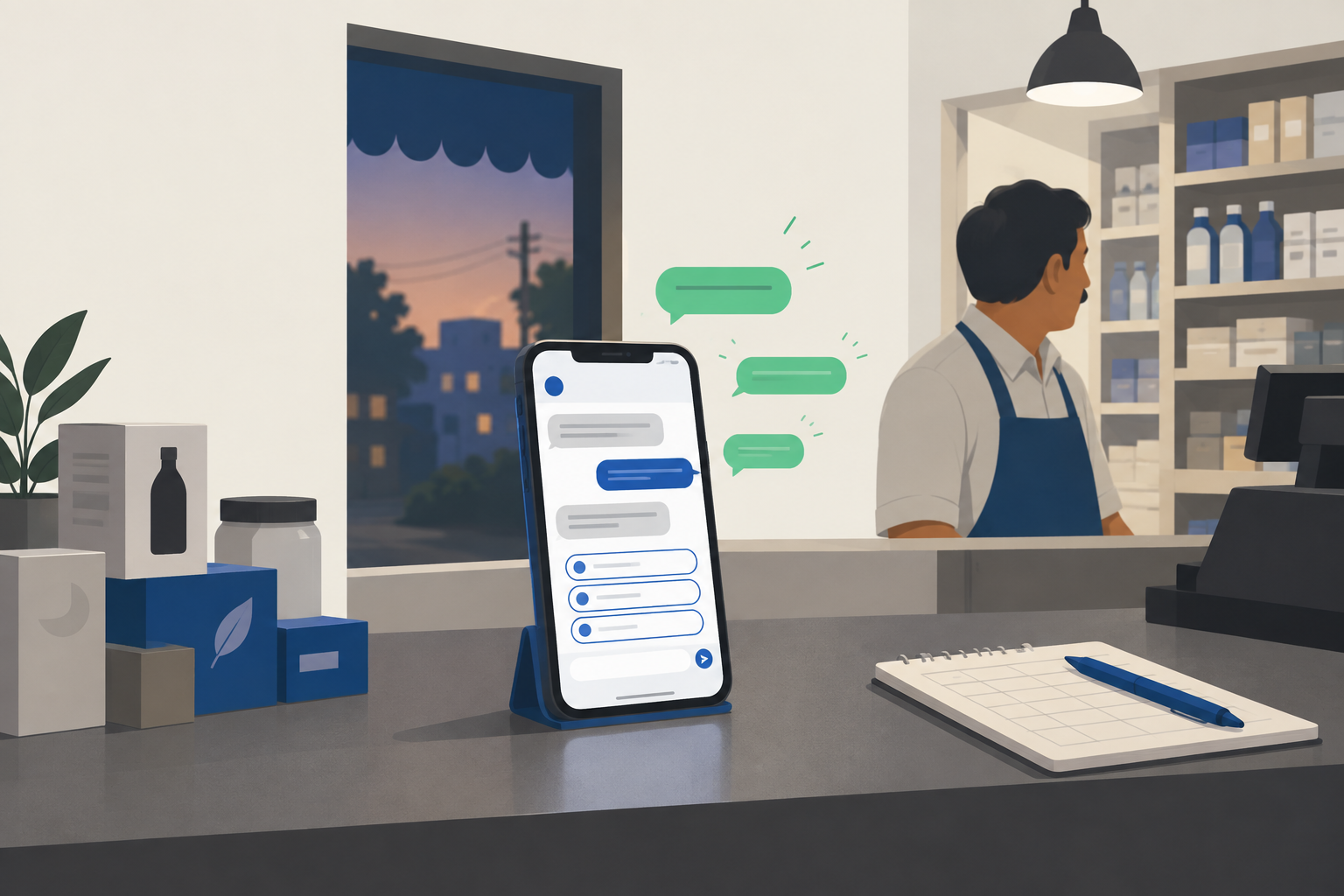
Your customers already message you on WhatsApp. They ask for prices at 11 pm, check whether an item is in stock during your lunch break, and send "hi" on a Sunday expecting an answer by Monday morning. A WhatsApp chatbot for business answers those messages instantly, collects the details you need, and hands the conversation to a person when it matters.
2026 has changed the maths, though. Meta moved WhatsApp to per-message billing in 2025, raised the Indian marketing rate in January 2026, and from 1 October 2026 starts charging for the ordinary replies businesses send inside the 24-hour customer service window. If you are planning a chatbot, or already run one, this guide explains what it costs now and how to set it up without wasting money.
What a WhatsApp chatbot actually does#
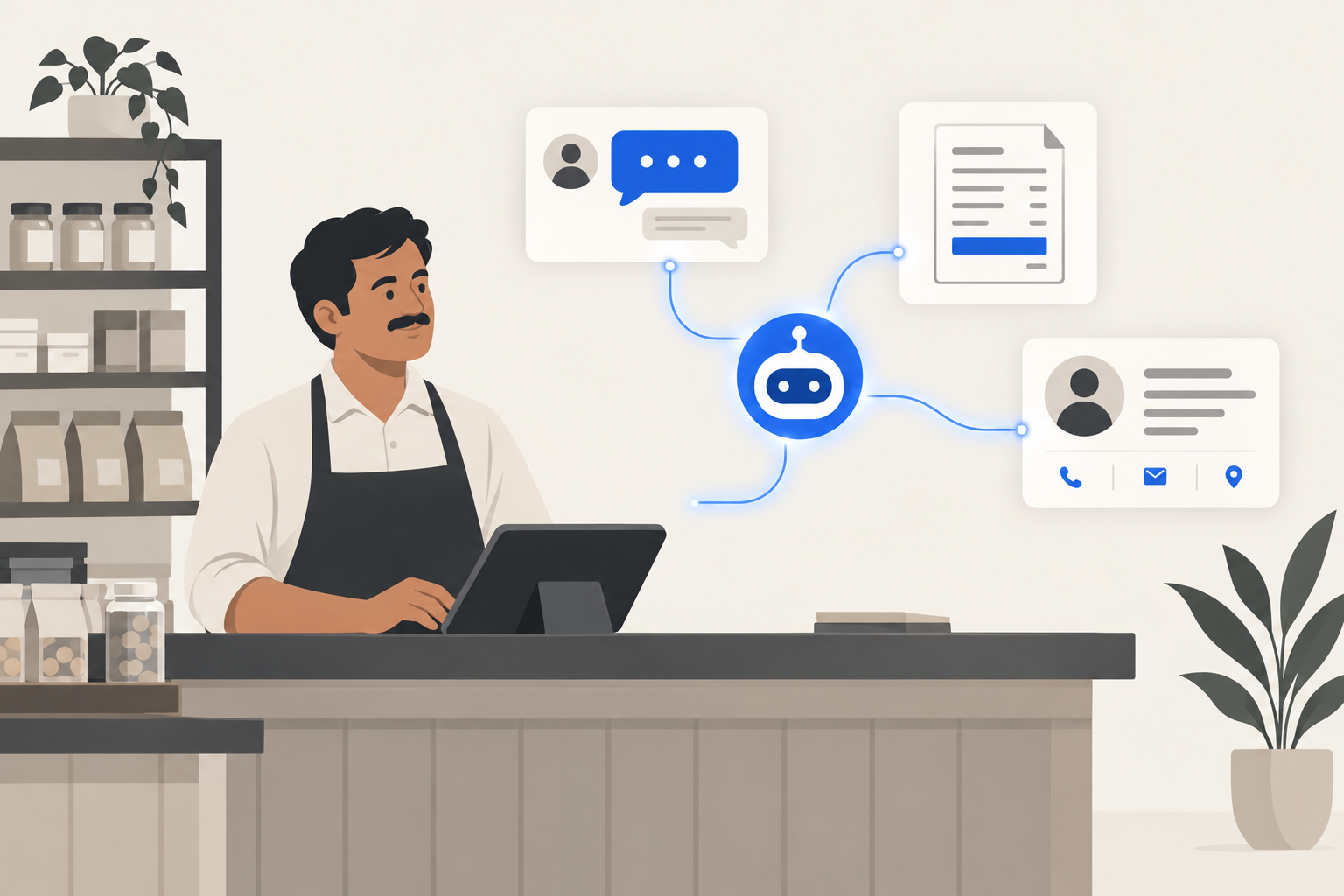
A WhatsApp chatbot is software connected to your business number that reads incoming messages and replies automatically. The useful ones do a handful of jobs well:
- Answer repeat questions — timings, location, prices, delivery areas, fees, stock.
- Capture leads — ask for name, requirement and budget, then push them into your CRM, Google Sheet or admin panel.
- Send updates — order confirmations, appointment reminders, payment links, dispatch alerts.
- Route to a human — when a customer is upset, asks something unusual, or is ready to buy.
There are two broad types. Rule-based bots follow menus ("Reply 1 for pricing"). They are cheap and predictable but frustrating when a customer types something unexpected. AI chatbots are trained on your own content — your price list, FAQs, policies and catalogue — and can understand free-text questions in English, Hindi or Hinglish. For most small businesses today, the best setup is a hybrid: AI for understanding questions, fixed flows for anything involving money, bookings or orders.
WhatsApp Business app vs WhatsApp Business API#
Before you think about chatbots at all, you need to know which WhatsApp you are on.
The WhatsApp Business app is free and fine for a single shop handling a modest number of chats. It offers greeting messages, away messages, quick replies and a catalogue. It cannot connect to your software, cannot be used by a large team at once, and does not support a proper custom chatbot.
The WhatsApp Business Platform (API) is what real chatbots run on. You access it directly through Meta's Cloud API or through a Business Solution Provider (BSP) such as AiSensy, Wati, Interakt or Gupshup. It lets you connect WhatsApp to your website, billing software, CRM or custom app, run automated flows, and have several staff reply from one number. This is where the per-message charges below apply.
A simple rule: if you get more enquiries than one person can comfortably reply to, or you want WhatsApp talking to your other systems, you need the API.
WhatsApp Business API pricing in India (2026)#
Meta charges per delivered message, and the rate depends on the category of message and the recipient's country. For Indian numbers, the per-message rates widely published on BSP rate cards are:
| Message type | What it is | Meta rate (India) |
|---|---|---|
| Marketing | Offers, promotions, broadcasts | ₹0.8631 |
| Utility | Order updates, reminders, confirmations | ₹0.115 |
| Authentication | OTPs and login codes | ₹0.115 |
| Service (from 1 Oct 2026) | Free-form replies within 24 hours of a customer message | ₹0.115 after 1,000 free per number per month |
These are Meta's charges only. Your BSP adds its own platform fee (commonly a monthly plan), and GST applies. Always confirm the current figures on Meta's official rate card or your provider's invoice, because Meta can revise rates at the start of any quarter.
Some things remain free: messages customers send you, and all messages sent within the 72-hour free entry point window that opens when a customer reaches you through a Click-to-WhatsApp ad or a Facebook Page button and you reply within 24 hours.
What changes on 1 October 2026#
Since November 2024, the replies you sent inside the 24-hour customer service window cost nothing. That is why many businesses built chatty bots that ask three or four questions before capturing a lead.
From 1 October 2026:
- Service messages become billable. Every free-form reply your bot or staff sends inside the 24-hour window is charged at the same rate as utility messages for that country.
- Each business phone number gets 1,000 free service messages a month. Charging starts from the 1,001st. The allowance resets monthly and does not carry forward.
- Utility templates sent inside the window are charged too. They had been free inside the window since July 2025.
- A payment method must be on file. Meta has said businesses without one by 30 September 2026 will have service message delivery stopped.
Separately, Meta's own built-in AI agent for WhatsApp (Meta Business Agent) moved to token-based billing on 1 August 2026, so "free AI replies" from Meta's side are no longer free either.
A worked example#
Say a coaching institute in Bokaro runs one WhatsApp number that sends about 3,000 bot and staff replies a month.
- First 1,000 service messages: free
- Remaining 2,000 × ₹0.115 = ₹230 a month in Meta service charges
That is small. The real risk is at scale, or with bots that send five short messages where one would do. A number sending 30,000 replies a month would pay roughly ₹3,335 in service charges alone — before marketing broadcasts, BSP fees and GST.
What a WhatsApp chatbot costs a small business in India#
Think of the total cost in three layers:
- Meta message charges — from the table above. For most small businesses these are modest if you stay disciplined with marketing broadcasts.
- BSP or hosting fee — a monthly subscription if you use a platform, or server and maintenance costs if you run the Cloud API directly.
- Build and training — designing flows, connecting WhatsApp to your systems, and training the AI on your content. This is a one-time project with occasional updates.
A ready-made BSP bot suits a business with standard needs: FAQs, a catalogue and a lead form. A custom-built chatbot makes more sense when WhatsApp has to talk to your own billing software, booking system, ERP or mobile app — for example checking live stock, creating an invoice, or confirming an appointment slot from your database. If you are weighing a custom build alongside an app, our guide to mobile app development cost in India explains how custom software projects are usually priced.
How to set up a WhatsApp chatbot for your business#
- List your top 20 questions. Pull them from your last month of chats. If a bot can answer these well, it has earned its place.
- Choose your route. Business app for very low volume; a BSP for standard automation; a custom integration if WhatsApp must connect to your own software.
- Get a dedicated number. It cannot be a number already registered on a personal WhatsApp account. You will also need a Meta Business Manager account for your business.
- Design short flows. Ask for everything you need in as few messages as possible. After October 2026, every extra reply has a price.
- Train the AI on your real content. Price lists, policies, service areas, fees — not generic text. A bot that guesses is worse than no bot.
- Always offer a human. Give customers an obvious way to reach a person, and alert your staff when the bot hands over.
- Review conversations weekly. Read what customers actually asked, fix wrong answers, and add missing questions.
Five ways to keep your WhatsApp bill low after October#
- Combine messages. Send one clear reply with buttons instead of three separate lines.
- Use buttons and lists. They reduce back-and-forth and wrong answers.
- Be careful with broadcasts. Marketing messages cost about seven times more than utility messages in India. Send fewer, better-targeted campaigns.
- Use Click-to-WhatsApp ads wisely. Conversations started from these ads open a 72-hour free window.
- Check your provider's markup. Meta's rate is the same for every BSP; the difference is what the provider adds on top.
Is a WhatsApp chatbot worth it for a small business?#
For most businesses that get regular enquiries on WhatsApp, yes — provided it is built around real customer questions and connected to the systems where your work happens. The October 2026 pricing change does not make chatbots expensive for small teams; it makes sloppy chatbots expensive. A focused bot that answers quickly, captures leads cleanly and knows when to call a human will usually pay for itself through the enquiries it saves after hours.
At Larwell Technologies in Bokaro Steel City, we build web, mobile and AI solutions for businesses across Jharkhand and India, including chatbots that connect WhatsApp to your website, billing software or app. If you would like help planning one, get in touch and tell us what your customers ask most.