Key takeaways
- Clinic management software handles appointments, patient records, prescriptions, billing and reminders in one place.
- In India, most small clinics pay between ₹5,000 and ₹25,000 a year; free and one-time-fee options also exist.
- The government launched eSushrut@Clinic in June 2026 at about ₹299 a month after subsidy, so private tools must now offer more value.
- ABDM features (ABHA, HFR, HPR) and DPDP-safe patient data are now must-haves, not extras.
- Try two or three tools for a week with your real staff before you pay for a full year.
A doctor in a small Indian town sees 30 to 60 patients a day. Most of the day is lost not to treatment, but to paper: OPD slips, old files that cannot be found, handwritten bills and phone calls asking "Doctor sahab kab aayenge?"
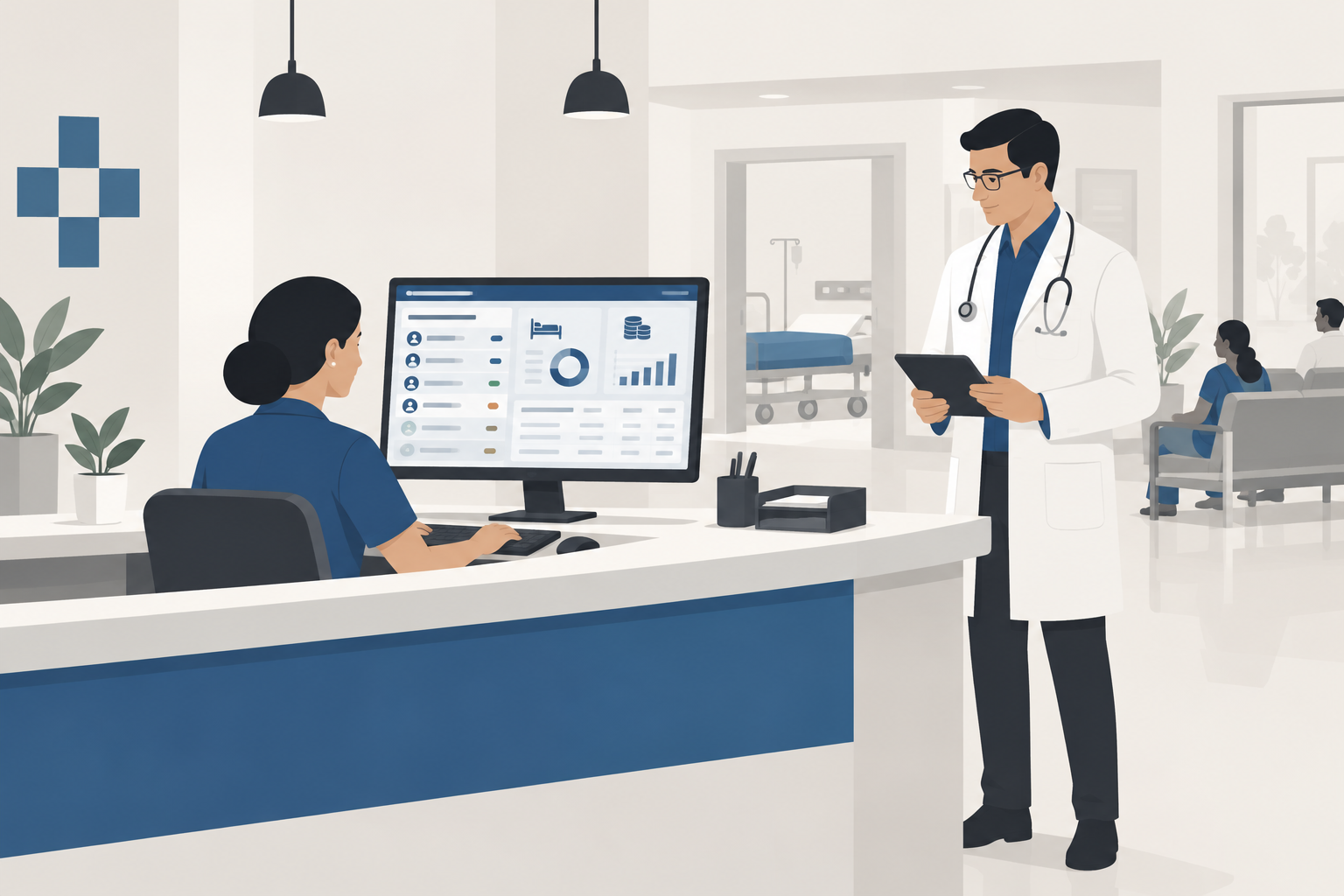
Clinic management software fixes this. It puts appointments, patient history, prescriptions, billing and reminders on one screen. In 2026 it has also become important for another reason: the government is pushing every clinic into the Ayushman Bharat Digital Mission (ABDM), and in June 2026 it launched its own low-cost clinic software.
This guide explains everything in simple words — what the software does, what it costs, the new rules, and how to choose one without wasting money.
What Is Clinic Management Software?#
Clinic management software is a computer or mobile app that runs the daily work of a clinic. Think of it as a digital front desk, file cupboard and bill book, all in one.
It is made for OPD clinics — single doctors, small polyclinics, dental, eye, skin, physiotherapy, homeopathy and Ayurveda clinics. A big hospital with beds, wards and an operation theatre needs a bigger system. If that is you, read our hospital management software guide instead.
Main Features You Should Expect#
A good clinic management software in 2026 should do at least these jobs:
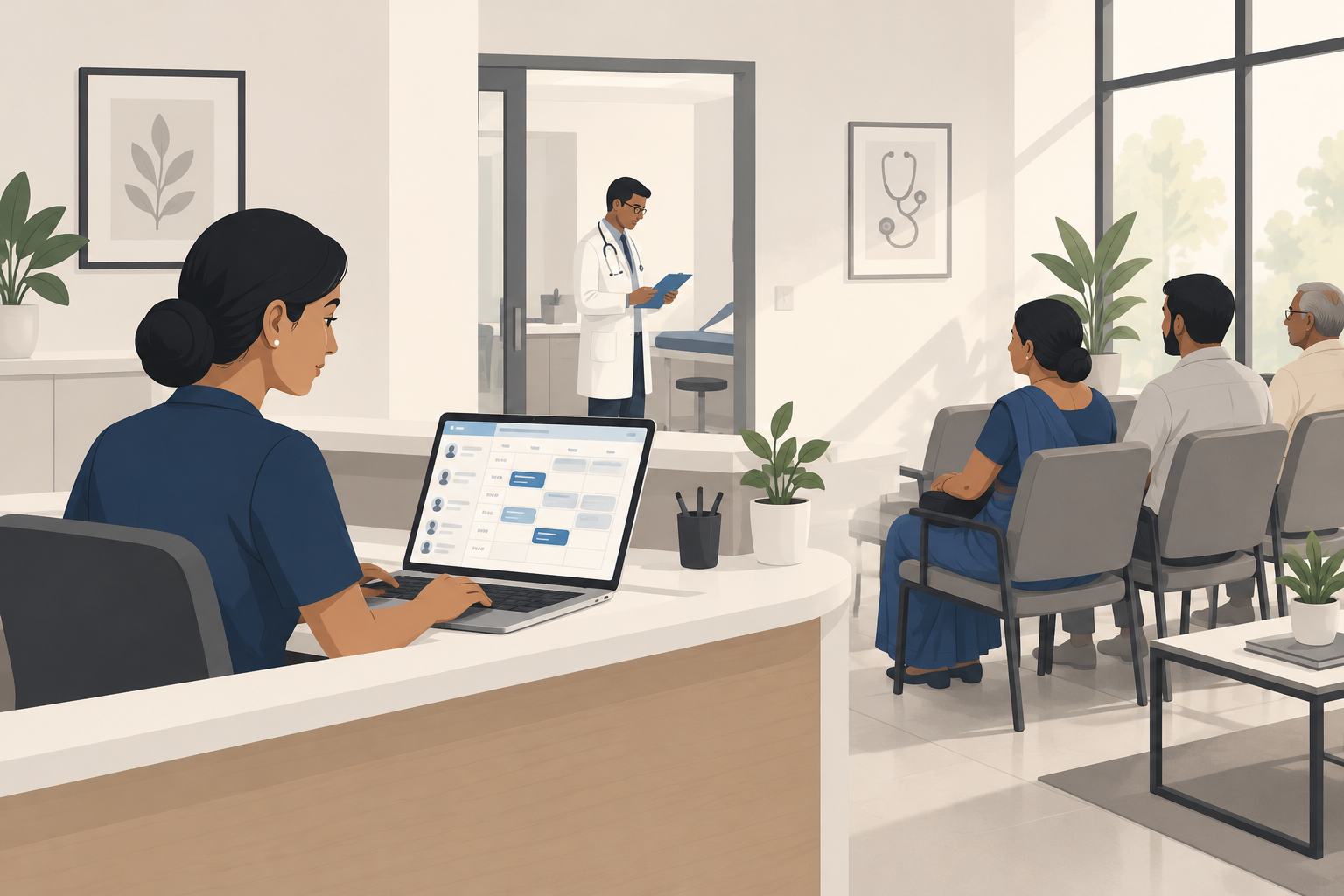
- Appointments and queue: Patients book online or on call. The receptionist sees the day's list. A token screen shows who is next.
- Patient records (EMR): Every visit, diagnosis, allergy, test report and old prescription is saved and opens in one click.
- Digital prescriptions: The doctor picks medicines from a list, adds dose and days, and prints or sends the prescription on WhatsApp.
- Billing and GST receipts: Consultation fees, procedures and packages are billed in seconds. Cash, UPI and card are all recorded.
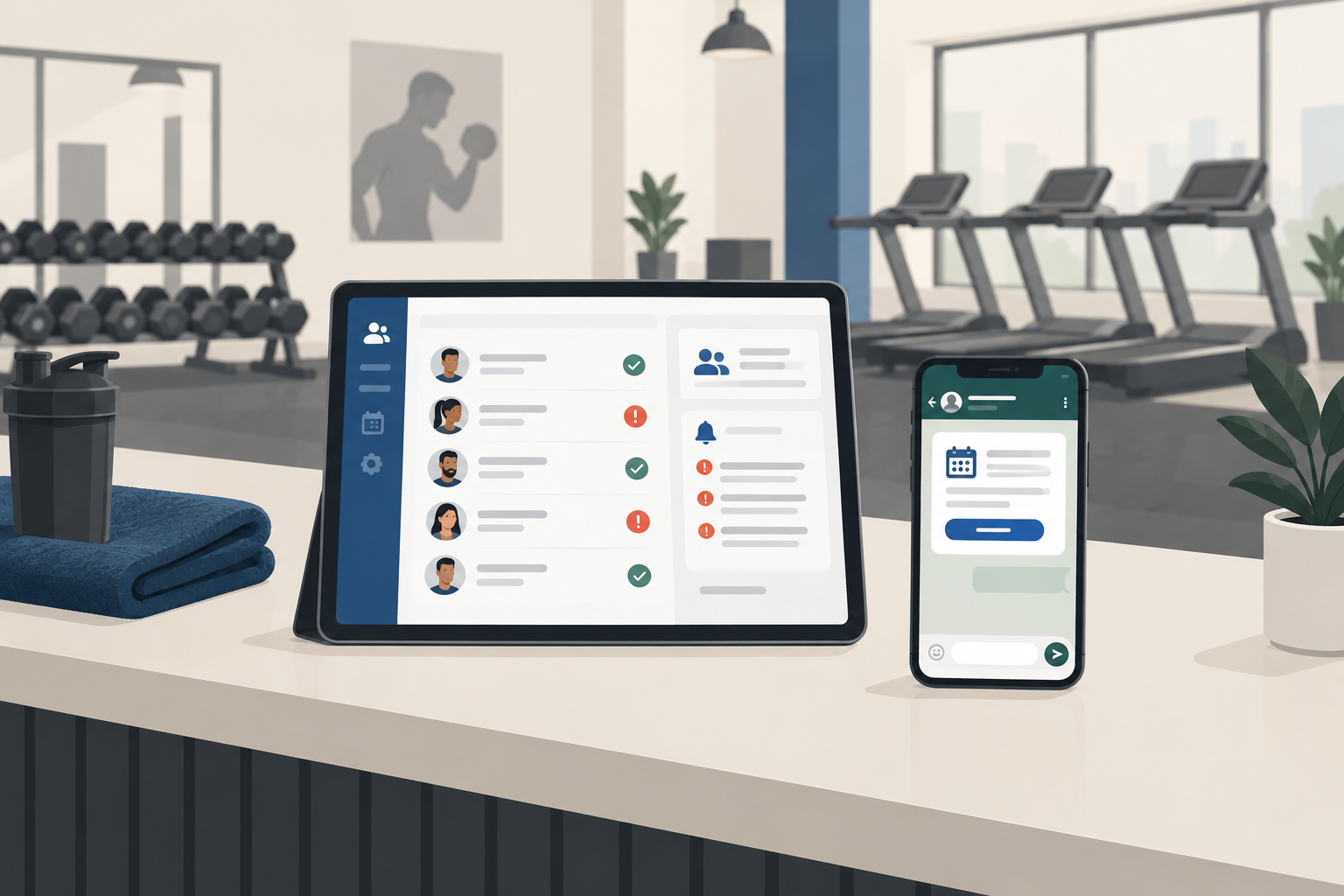
- Reminders: Automatic SMS or WhatsApp messages for appointments, follow-ups and vaccine dates.
- Reports: Daily collection, patient count, top diagnoses and pending dues.
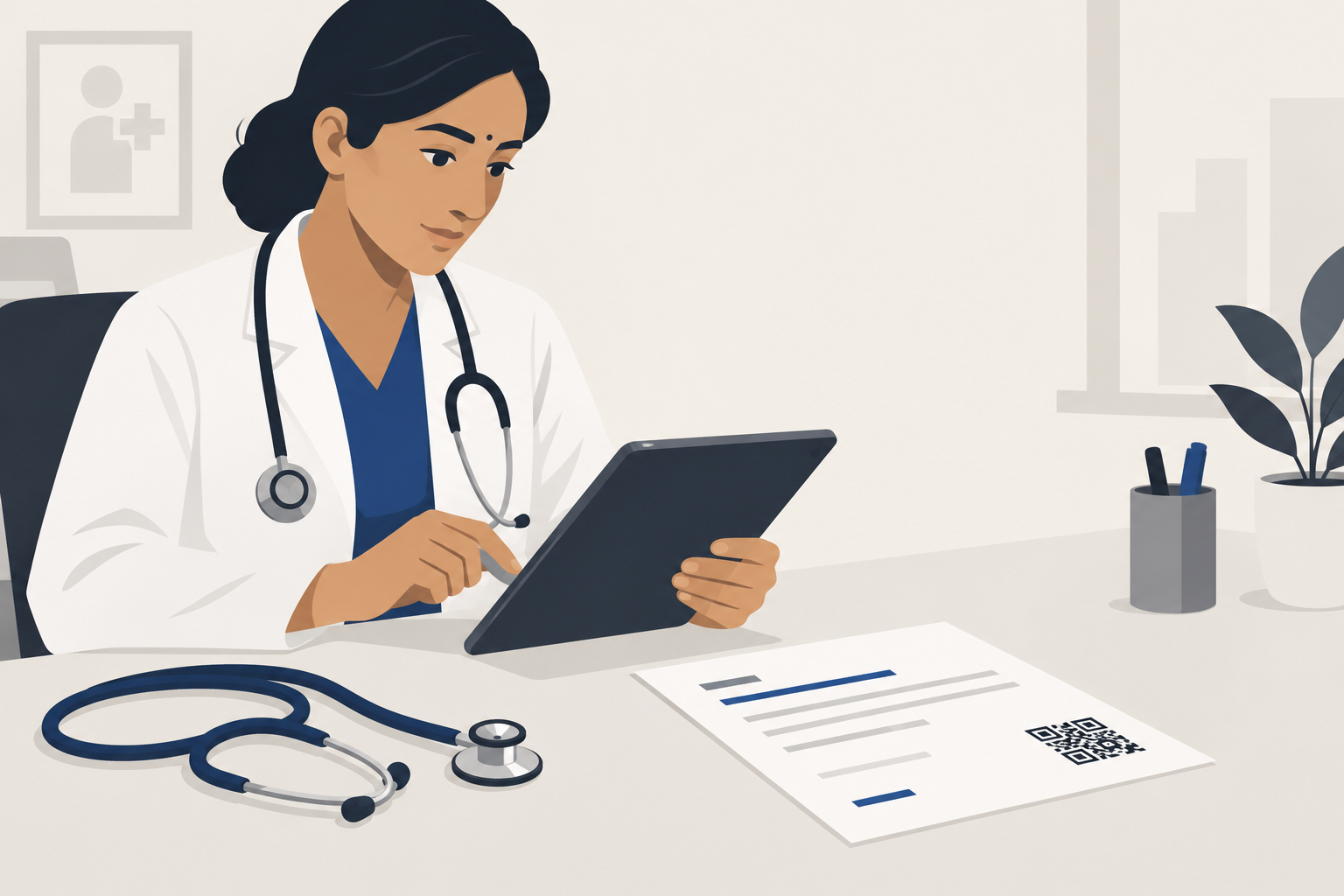
Nice-to-have features include telemedicine video calls, a small pharmacy or inventory module, lab report upload and speech-to-text, where the doctor speaks and the notes type themselves. If your clinic has its own medical store, see our pharmacy billing software guide too.
Why Indian Clinics Are Switching in 2026#
Three things changed this year.
1. ABDM is reaching small clinics#
ABDM is India's digital health network. Every patient can have an ABHA health ID, every clinic can be listed in the Health Facility Registry (HFR), and every doctor in the Health Professional Registry (HPR). By August 2026, government data showed over 96 crore ABHA IDs created and more than 110 crore health records linked to them. Patients are starting to expect that their prescription will show up in their ABHA app.
2. The government launched eSushrut@Clinic#
On 29 June 2026, the Union Health Minister launched eSushrut@Clinic, a light, cloud-based clinic software built by C-DAC. It is a smaller version of the eSushrut system used at AIIMS hospitals. As reported at launch, the base plan is ₹499 a month for up to five users, with a ₹200 government subsidy that brings it to about ₹299 a month, and the first three months free. It includes registration, billing, reports, speech-to-text notes, basic inventory and ABDM tools.
This is good news for clinics. It also means any private software you pay more for must clearly give you more — better support, WhatsApp reminders, your own branding, or features for your speciality.
3. Patient data law (DPDP)#
India's data protection law now covers patient details too. Phone numbers, health history and reports are sensitive data. Your software must store them safely, ask for consent and let you delete data on request. Our DPDP compliance checklist explains this in simple words.
Clinic Management Software Price in India (2026)#
Prices vary a lot. Here are rough ranges based on what Indian vendors list publicly in 2026:
| Type | Typical price | Best for |
|---|---|---|
| Free / basic apps | ₹0 | Trying out, single doctor with low patient count |
| Government (eSushrut@Clinic) | About ₹299/month after subsidy | Small OPD clinic that wants ABDM at low cost |
| Cloud subscription (SaaS) | ₹5,000 – ₹25,000/year | Most single-doctor and small polyclinics |
| One-time licence (desktop) | ₹5,000 – ₹25,000 once + yearly AMC | Clinics with weak internet |
| Advanced / multi-branch | ₹50,000 – ₹2,00,000+/year | Chains, diagnostic centres, day-care clinics |
| Custom-built software | ₹1.5 lakh – ₹8 lakh+ one time | Clinics with special workflows or their own app |
Hidden costs to ask about: setup or data-entry charges, SMS and WhatsApp message costs, extra fees per user or per branch, yearly price increases, and charges to export your own data if you leave.
Cloud or Desktop: Which Is Better?#
Cloud software runs in a browser or app. You can see your clinic from home, data is backed up automatically, and updates are free. The risk is that if the internet goes down, work stops — unless the software has an offline mode.
Desktop software is installed on one computer. It works without internet, but backups are your job, and if the computer crashes you can lose years of records.
For most clinics in 2026, cloud software with offline mode is the safest choice. Keep a cheap 4G dongle as backup internet.
How to Choose the Right Clinic Management Software#
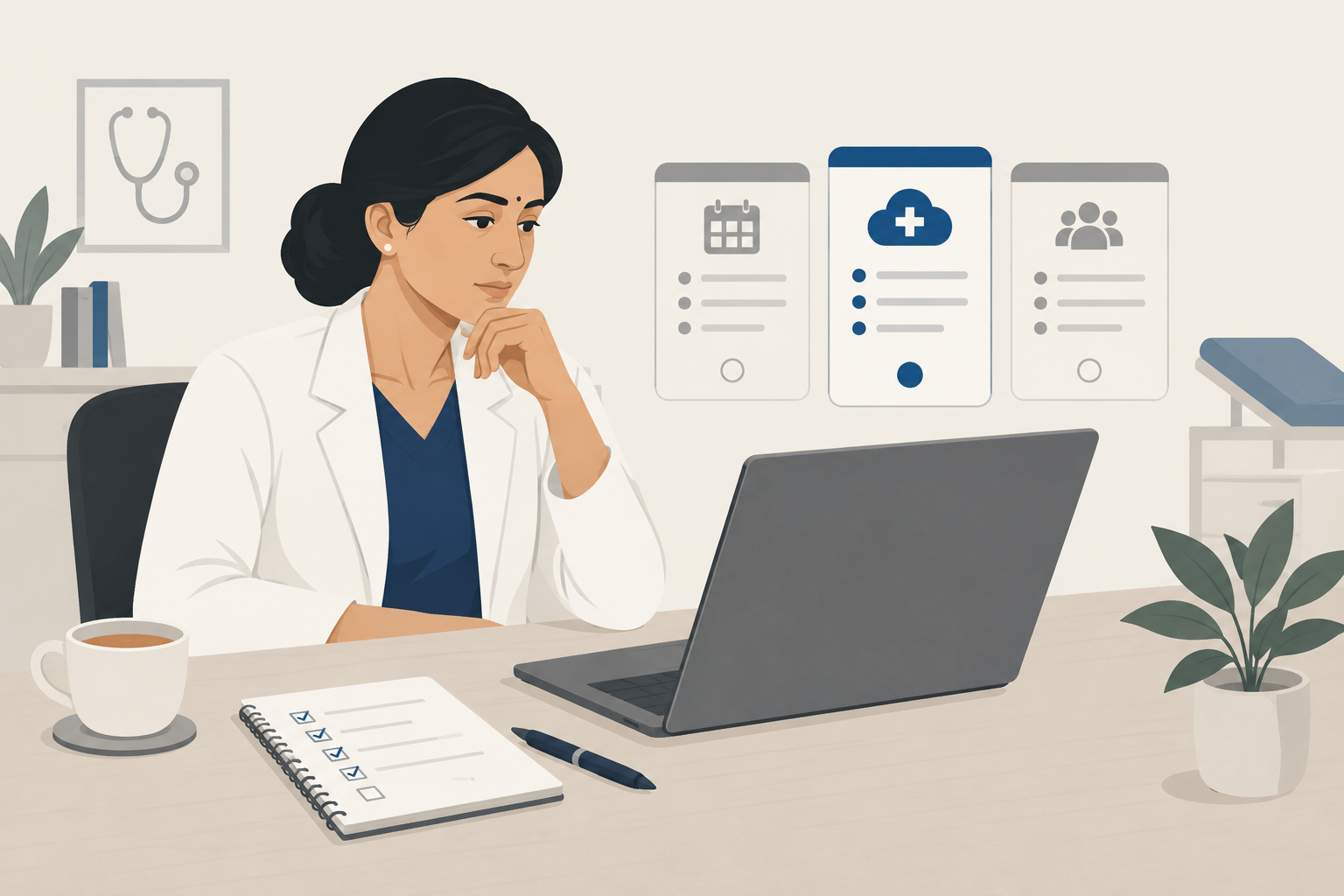
Use this simple checklist before you pay:
- Is it made for India? It should support GST receipts, UPI, Hindi or local language prescriptions and Indian medicine names.
- Is it ABDM-ready? Ask if it can create ABHA IDs and share records with the patient's ABHA app, and whether it is listed as ABDM-integrated.
- Does it fit your speciality? A dentist needs a tooth chart. An eye clinic needs vision fields. A physio needs session packages. Generic software may not have these.
- Can your receptionist use it in one day? Ask for a free trial and let your actual staff try it — not just you.
- Does it send WhatsApp reminders? This alone cuts missed appointments a lot. Our WhatsApp chatbot guide explains the 2026 message costs.
- Is support in your language and on your time? A clinic opens at 9 am and closes at 9 pm. Support should too.
- Can you take your data out? You should be able to export all patient records in Excel or PDF at any time, free.
- Is patient data safe? Ask where the data is stored (it should be in India), about backups, and about login controls for each staff member.
Common Mistakes Clinics Make#
- Buying the biggest package first. Start with what you need today. Add modules later.
- Skipping old data entry. If old patient records are not added, the doctor still opens the cupboard. Ask the vendor to help import them.
- Not training staff. Software fails when the front desk goes back to paper because nobody showed them how.
- Ignoring the yearly renewal price. A cheap first year can double in year two. Get renewal prices in writing.
- Forgetting about ABDM. Software that cannot connect to ABDM may need to be replaced within a year or two.
Ready-Made or Custom Software?#
Ready-made software is the right choice for most clinics. It is cheaper, faster to start and already tested.
Custom software makes sense when you run several branches, want your own branded patient app, need to connect with your lab or pharmacy, or have a special workflow no product supports. At Larwell Technologies we build custom clinic and hospital systems, patient apps and PWA apps for clinics in Bokaro, across Jharkhand and abroad. Read more about custom software development to see if it fits you.
Final Word#
Clinic management software is no longer a luxury. With ABDM growing, the government's own ₹299 option live, and patients expecting WhatsApp updates, 2026 is the right year to leave paper behind. Start small, test with your real staff, check ABDM support and data safety, and choose the tool your receptionist actually likes using.
Need help choosing, or want a clinic system built around how you work? Talk to Larwell Technologies — we will give you an honest suggestion, even if a ready-made tool suits you better.