Key takeaways
- A chatbot answers questions; an AI agent completes the task end to end — that distinction decides whether you save money
- Starter automations in India cost ₹15,000 to ₹35,000 one-time; custom agents run ₹1.5 lakh to ₹8 lakh
- Gartner expects AI agent spending to nearly triple from 2025 to 2026, and Indian tools now handle Hinglish, GST and UPI natively
- Automate a repetitive, rule-based, high-volume task first — lead handling is usually the highest-return starting point
- Set approval thresholds so the agent acts freely below a limit and asks a human above it
AI agents for small business India have moved from hype to something you can actually afford. Most owners here have already tried a chatbot — it answered three questions, got the fourth one wrong, and quietly got switched off.
Agents are a different thing entirely, and 2026 is the year they became cheap enough for a shop, a clinic or a ten-person agency to run. This guide covers what they do, what they cost, and where to start.
Chatbot vs AI agent: the difference that matters#
A chatbot answers. An agent acts.
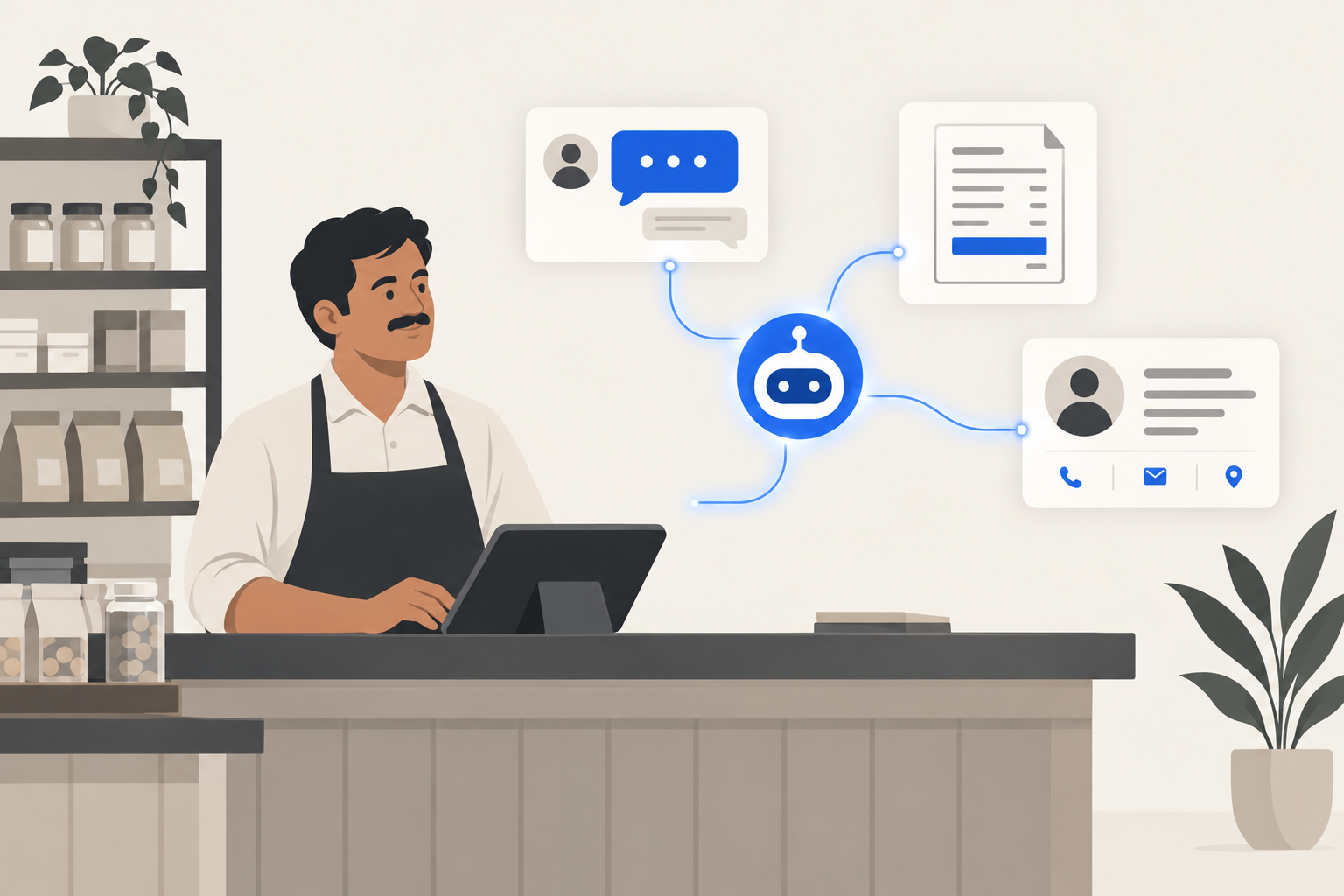
Ask a chatbot "where is my order", and it replies with a link. Ask an agent, and it checks the identity of the customer, looks up the order in your database, sees that the delivery failed, triggers a replacement, updates the payment record and messages the customer back — without anyone on your team touching it.
That is the whole shift. The chatbot reduces typing. The agent reduces the number of people needed in the loop.
Why 2026 is the turning point#
Spending on AI agents is climbing steeply. Gartner estimates it will move from roughly eighty-six billion dollars in 2025 to around two hundred and six billion dollars in 2026 — making purpose-built agent software the fastest-growing slice of enterprise software.
More relevant for Indian businesses: the tooling has localised. Razorpay has launched an agent studio for financial workflows, and Indian platforms now handle regional languages, Hinglish, GST rules and UPI flows natively. Two years ago, building this meant fighting tools designed for a US market. It no longer does.
What small businesses in India are actually automating#
The winners are boring, repetitive and high-volume:
- Lead capture from a website form or WhatsApp, qualified and pushed into a CRM with a follow-up scheduled
- Order status, refunds and replacements resolved end to end instead of escalated
- Invoice and GST data pulled out of documents and entered into the accounting system
- Inventory reordering triggered by actual stock movement rather than a weekly guess
- Appointment booking and reminders for clinics, salons and coaching centres
Notice none of these are exotic. They are the tasks your staff does between the work you actually pay them for.
What it costs in rupees#
Here is where most articles go vague. Real 2026 numbers for the Indian market:
| Type of build | Typical cost |
|---|---|
| Starter automation (form to WhatsApp to CRM) | ₹15,000 – ₹35,000 one-time |
| No-code workflow subscriptions | ₹2,000 – ₹15,000 per month |
| Custom agent with your own data and systems | ₹1.5 lakh – ₹8 lakh |
| LLM API usage for an active SME agent | ₹10,000 – ₹1 lakh per month |
A well-scoped agent project typically pays for itself in six to nine months. If a vendor cannot tell you which specific hours or errors disappear, the payback maths does not exist and you should not sign.
The mistakes that waste money#
Automating a broken process. An agent running a bad workflow just produces bad outcomes faster. Fix the process on paper first.
Starting with the hardest thing. Everyone wants the agent that handles angry customers. Start with the one that copies data between two systems — it is dull, it works, and it builds trust internally.
Ignoring data quality. Poor records are the single biggest cause of wrong answers. An agent reading a messy customer database will confidently tell customers the wrong thing.
No approval thresholds. Let the agent act freely below a limit — a refund under a set amount, a reorder under a set quantity — and require a human above it. This one design decision prevents almost every horror story.
How to choose your first agent#
Pick the task that is repetitive, rule-based, and happening many times a day. Write down how many hours a week it consumes. Then measure the same number sixty days after the agent goes live. If it has not moved, you automated the wrong thing.
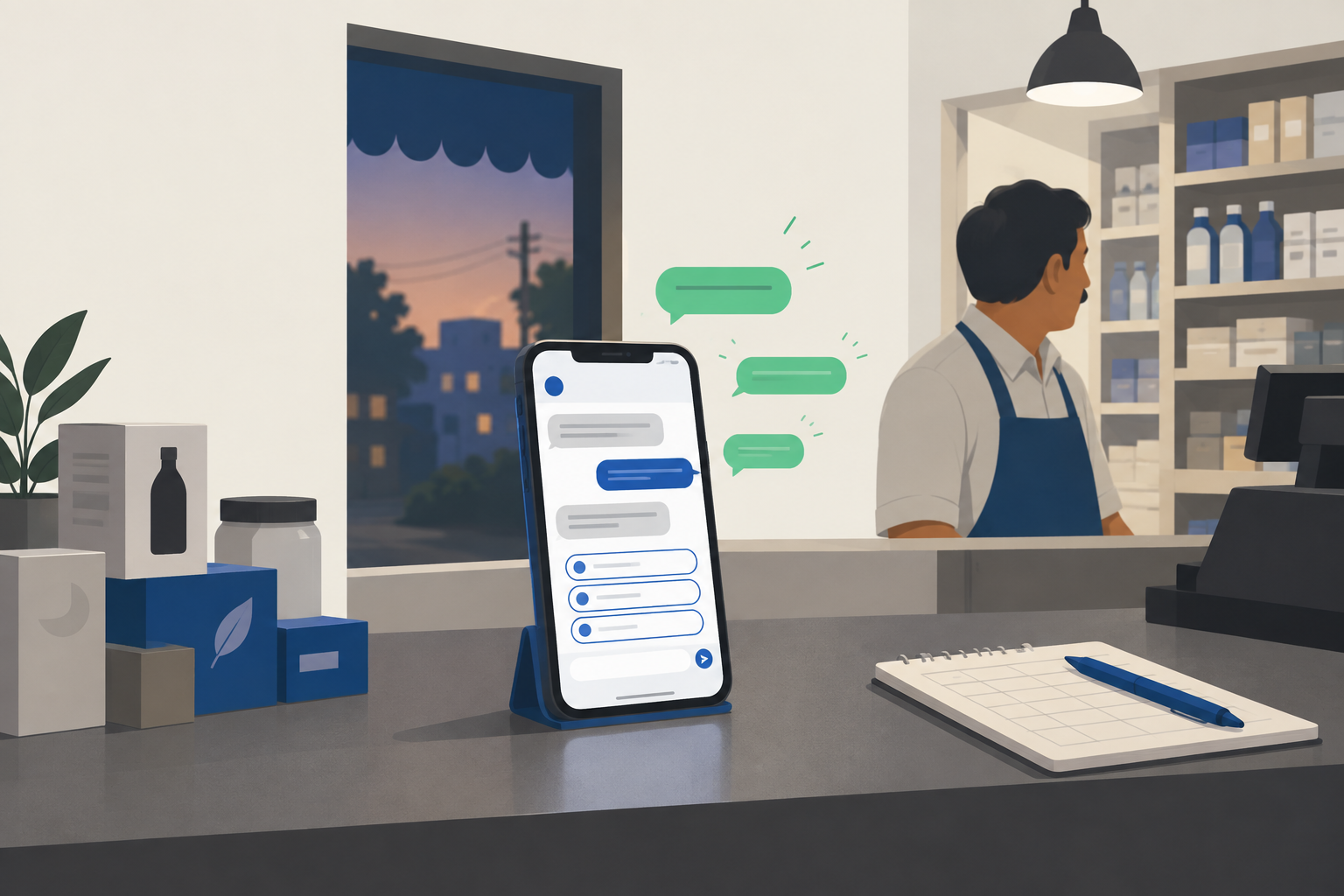
For most businesses we work with, that first agent is lead handling — because leads arriving on WhatsApp at nine at night are the ones that get lost, and those are the ones worth money.
Building agentic AI with Larwell#
At Larwell Technologies we build agentic AI systems for Indian businesses — agents that connect to your existing CRM, ERP, billing system or website and actually complete work rather than just chat. Agentic AI development is a core part of what we do, alongside web, PWA and mobile app builds, so the agent is designed to fit the systems you already run.
We work with businesses across Bokaro Steel City, Ranchi and the wider Jharkhand region, as well as clients nationally. That usually starts with a short scoping conversation about which workflow is costing you the most hours, not with a demo.
If you are weighing up your wider digital setup first, our guides on choosing a website design company in Bokaro and selecting billing software for your shop cover the foundations an agent will eventually need to plug into.
Start small, measure honestly, and expand only what proves itself. That is how AI agents turn into profit rather than another subscription you forget to cancel.