Key takeaways
- Agentic AI tools don't just suggest code — they plan tasks, edit multiple files, run tests and fix failures.
- Gartner expects 40% of enterprise apps to include task-specific AI agents by the end of 2026.
- Gartner also warns over 40% of agentic AI projects may be cancelled by 2027 due to cost, unclear value or weak controls.
- Routine features get faster and cheaper; discovery, design, security and code review still need experienced people.
- Ask your agency who reviews AI-written code, how your data is protected, and what AI features will cost to run.
Two years ago, AI in a developer's editor was a clever autocomplete. It guessed the next line, and a human decided whether to keep it. In 2026 that picture has changed, and agentic AI in software development is the reason. The tools now take a task — "add GST-wise tax reports to the admin panel" — break it into steps, edit several files, run the tests, read the errors and try again.
If you are a business owner planning an app, a website or a custom software system, this shift affects how fast your project can move, what you should pay for, and which questions you should ask the agency building it.
What "agentic" actually means#
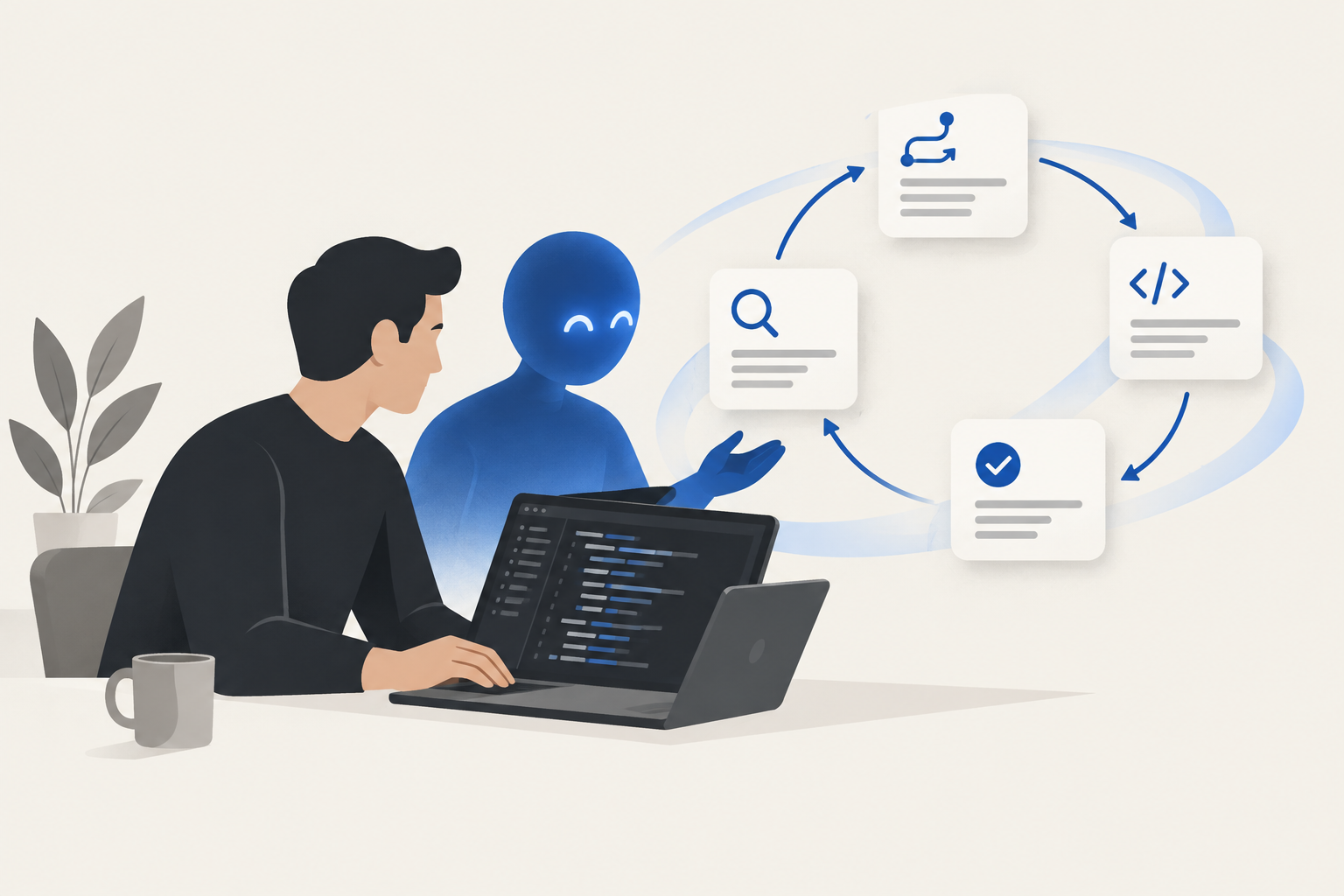
A normal AI assistant responds. You ask, it answers, and it waits for you again. An AI agent is given a goal and works towards it on its own: it plans, uses tools, checks its results and keeps going until the task is done or it needs a human decision.
In software development, that usually means an agent can:
- read the existing codebase to understand how things are structured
- plan a change and apply it across multiple files
- run the test suite, read failures and fix them
- write documentation and prepare the change for review
The simplest way to picture the difference: an assistant is a spell-checker, an agent is a junior co-author who drafts the chapter and hands it to an editor.
A word of caution before going further. Analysts have warned about "agent-washing" — ordinary chatbots being relabelled as agents for marketing. If a tool cannot take actions and check its own work, it is an assistant, whatever the brochure says.
Why everyone is talking about it in 2026#
The numbers explain the noise. Gartner forecast that 40% of enterprise applications will include task-specific AI agents by the end of 2026, up from under 5% in 2025. Its longer-range best-case view puts agentic AI at around 30% of enterprise application software revenue by 2035.
The same firm has also issued a sobering warning: more than 40% of agentic AI projects are expected to be cancelled by the end of 2027, because of rising costs, unclear business value or weak risk controls. Both predictions are true at once. The technology is real, and a lot of projects built on hype will still fail.
For a business buying software, that is the useful takeaway: agentic AI is a powerful tool in a disciplined team's hands, not a magic replacement for one.
How agentic AI changes the way software gets built#
1. Faster first drafts of routine work#
Much of any business app is predictable: login and roles, CRUD screens for products or customers, validation rules, admin panels, standard reports. Agents are good at this "boilerplate" layer. A developer who once spent two days scaffolding an admin module can now review an agent's draft in an afternoon.
2. More testing, not less#
Because an agent can write and run tests cheaply, a well-run team ends up with more automated test coverage. That matters to you long after launch, when a small change to billing should not quietly break stock updates.
3. Maintenance and upgrades become cheaper#
Framework upgrades, dependency updates and repetitive refactors are tedious for humans and well suited to agents. Projects built on popular frameworks like Laravel, with clear conventions, benefit the most because agents understand the structure quickly.
4. The senior developer's job becomes more important#
The work shifts from typing code to defining the task, setting constraints and reviewing output. Architecture, data design, security and understanding your business rules still sit with people. An agent will confidently build the wrong thing if nobody tells it what "right" looks like.
What it means for your project cost and timeline#
It is tempting to assume AI should make every quote half the price. It rarely works that way.
- Routine features get cheaper and faster. Standard screens, integrations with well-documented APIs and reports benefit most.
- Discovery, design and decisions don't shrink much. Understanding your workflow, designing the data model and agreeing on scope still take human time.
- Review is a real cost. Every line an agent writes still needs a competent developer to read it. Skipping that step is how security holes ship.
- Running costs may rise if you ship agents inside your product. An app that uses AI agents for customers — auto-replies, order handling, document processing — pays for model usage every month. Budget for it the way you budget for hosting.
For a rough baseline of what builds cost today, see our guides to mobile app development cost in India and ecommerce website development cost.
The risks worth taking seriously#
Agentic tools make mistakes, and they make them quickly and confidently. The common failure points are:
- Security shortcuts. Code that works in a demo but skips permission checks or validates input poorly.
- Hidden complexity. Several files changed in one go can hide a bug that a human would have caught in a smaller change.
- Data exposure. Pasting customer data or credentials into third-party tools without controls.
- Nobody owns the code. If the agency cannot explain what the agent built, you will pay for it later.
None of these are reasons to avoid agentic AI. They are reasons to insist on review, testing and clear ownership.
Questions to ask your development partner#
Before you sign, ask the agency:
- Do you use AI agents in development, and on which parts of the project?
- Who reviews AI-generated code, and how?
- What automated test coverage will be handed over at launch?
- How is our data and source code protected when AI tools are used?
- If we want AI agents inside the product, what will they cost to run each month?
Clear, specific answers are a good sign. Vague enthusiasm is not.
Agents inside your business, not just your codebase#
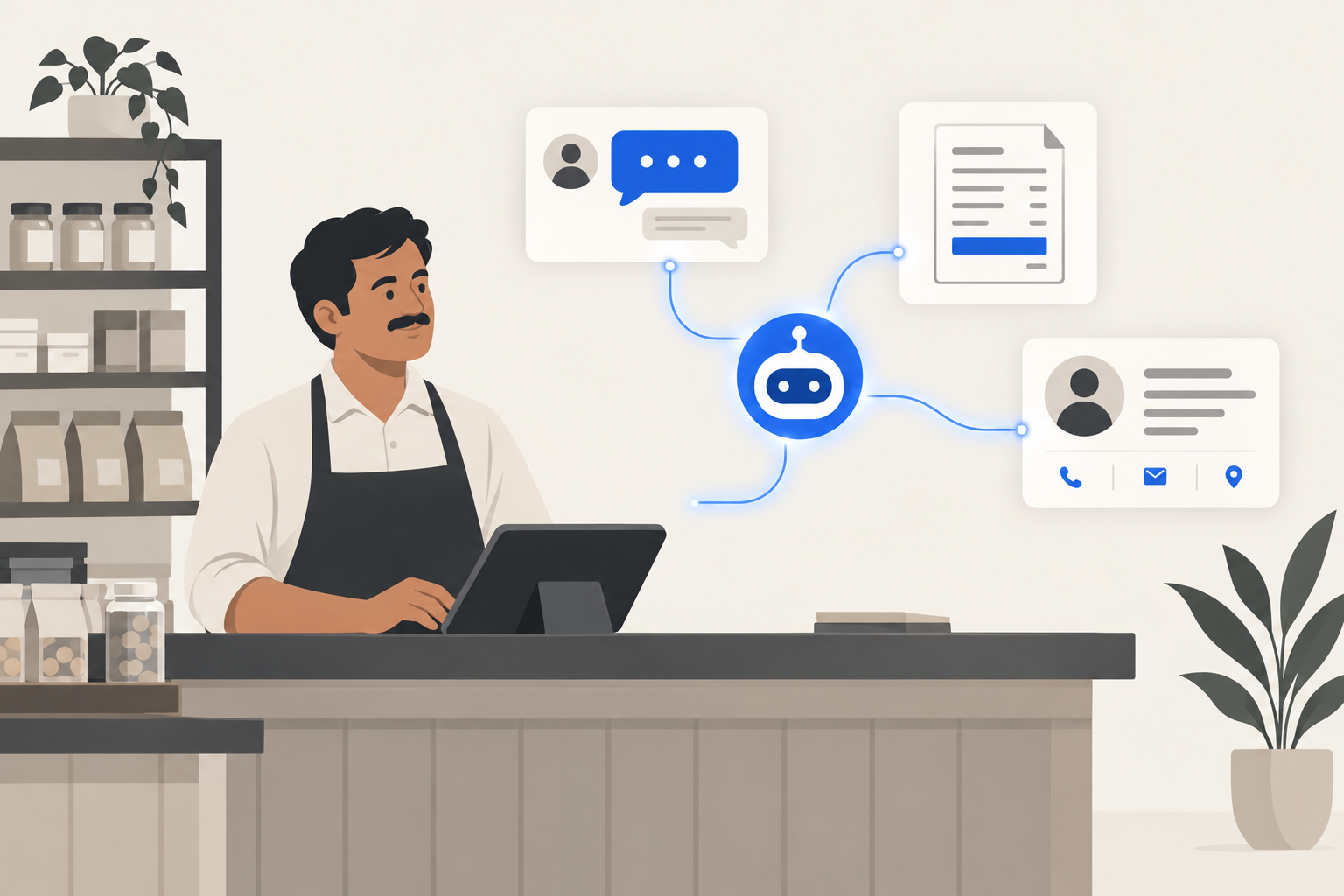
Agentic AI is not only changing how software is built — it is becoming part of what gets built. Order-handling assistants, lead qualification, invoice matching and customer support agents are all practical in 2026. If you are exploring that side, our guide to AI agents for small business in India covers where they pay off and where they don't.
The bottom line#
Agentic AI in software development is the biggest change to how apps and websites are built in years. Used with discipline, it means faster delivery of routine work, better test coverage and cheaper maintenance. Used carelessly, it means fast-moving mistakes. The winners will be teams that pair capable agents with experienced people who still own the architecture, the review and the result.
Planning a web, mobile or custom software project and want to understand where AI can genuinely save time and budget? Talk to Larwell Technologies and we'll walk you through it.