Key takeaways
- Online festive sales in India are projected at roughly ₹1.5–1.55 lakh crore in 2026, with strong demand from Tier-2 and Tier-3 cities.
- Plan around key dates: Big Billion Days from 8–9 October, Navratri on 11 October, Dussehra on 20 October and Diwali on 8 November.
- Anything you want working for the festive season should be live before Navratri begins.
- Focus on quick wins: an updated Google listing, a fast mobile website, tested payments, WhatsApp replies and a ready billing counter.
- Save big builds like full online stores, apps and ERP migrations for after Diwali.
Every year, the same thing happens. The festive season arrives, customers start searching, calling and messaging — and a lot of small businesses spend the busiest month of the year fighting their own systems. The website loads slowly, the Google listing shows old timings, WhatsApp messages pile up unanswered, and the billing counter queue stretches out of the door.
This guide collects the festive season sales tips for small business owners that actually matter in the next three weeks. No big rebuilds, no expensive ad campaigns — just the fixes that decide whether a customer who is already looking for you ends up buying from you.
Why Diwali 2026 is worth preparing for#
Industry estimates put India's online festive sales at roughly ₹1.5–1.55 lakh crore in 2026, about 25–29% more than last year. And the growth is not only in metro cities: in 2025, more than 70% of the traffic during Amazon's Great Indian Festival came from Tier-2 and Tier-3 cities.
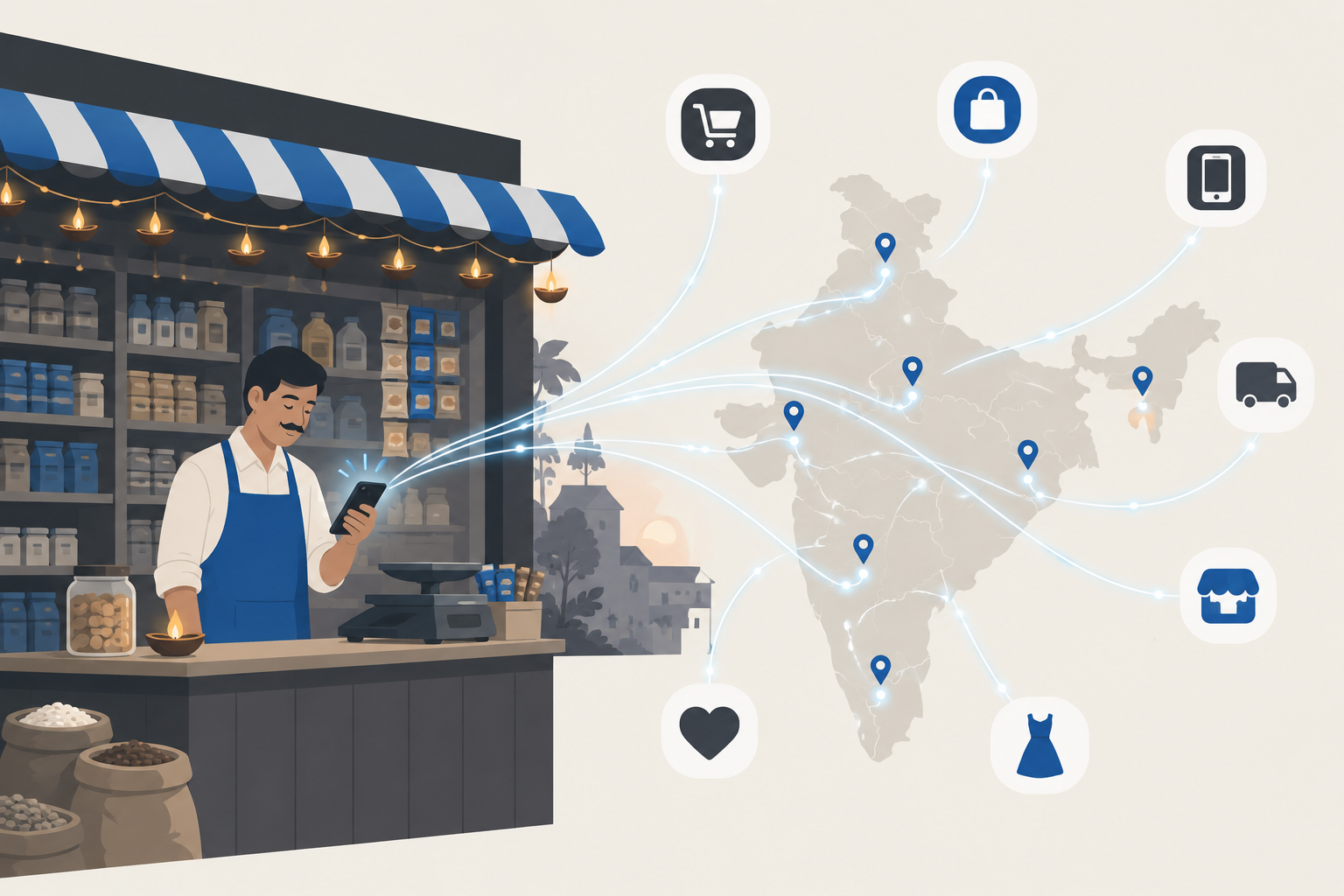
That matters for local businesses in towns like Bokaro, Dhanbad and Ranchi. Your customers are shopping on their phones this season, comparing options, and checking whether you are open before they leave home. Even if you sell mostly from a physical shop, the sale is often decided online first.
Quick commerce is changing expectations too. Its share of online festive sales rose from about 8% in 2024 to 12% in 2025, which means customers are getting used to fast replies and fast delivery. A shop that takes a day to answer a WhatsApp enquiry now feels slow.
Key festive dates to plan around#
| Date | Event | What it means for you |
|---|---|---|
| 8–9 October | Flipkart Big Billion Days begins | Price comparisons peak; customers check local shops against online offers |
| 11 October | Navratri begins | Clothing, puja items and gifting demand starts |
| 18–21 October | Durga Puja | Peak footfall in Jharkhand and eastern India |
| 20 October | Dussehra | Electronics, vehicles and big-ticket purchases |
| 8 November | Diwali | Gifting, sweets, decor and household buying peaks in the final week |
The practical takeaway: anything you want working for the festive season should be live before 11 October. Changes made in the middle of the rush are rushed changes.
The three-week festive readiness checklist#
Week 1: Get found#
- Update your Google Business Profile. Add festive opening hours, fresh photos of your shop and products, and a post about your Diwali offer. Many customers search "near me" and call directly from the listing, so make sure your phone number and location pin are correct.
- Check your website on a phone. Open it on mobile data, not office Wi-Fi. If the homepage takes more than a few seconds, or prices and contact buttons are hard to find, fix those first.
- Add a festive offers page. One simple page with your offers, validity dates and a WhatsApp button is enough. It gives you one link to share everywhere.
Week 2: Make it easy to buy#
- Test checkout and payments end to end. Place a real test order with UPI and a card. Broken payment links during peak week lose sales you have already paid to attract.
- Sync your stock. If you sell both online and in-store, make sure stock numbers match. Selling an item online that has already gone from the shelf leads to cancellations and angry reviews.
- Set up delivery and pickup options clearly. State your delivery areas, charges and cut-off dates for Diwali delivery on the website and in your WhatsApp replies.
If you do not have an online store yet, three weeks is not enough to build a full one properly. A catalogue page with WhatsApp ordering can work for this season, and a complete store can follow after Diwali. Our guide to ecommerce website development cost in India explains what a proper store costs when you are ready.
Week 3: Handle the rush#
- Automate your WhatsApp replies. Set quick replies for prices, timings, delivery areas and offers. If enquiries are heavy, a WhatsApp chatbot for business can answer instantly and pass serious buyers to your staff. Note that Meta starts charging for service replies from 1 October 2026, so keep flows short.
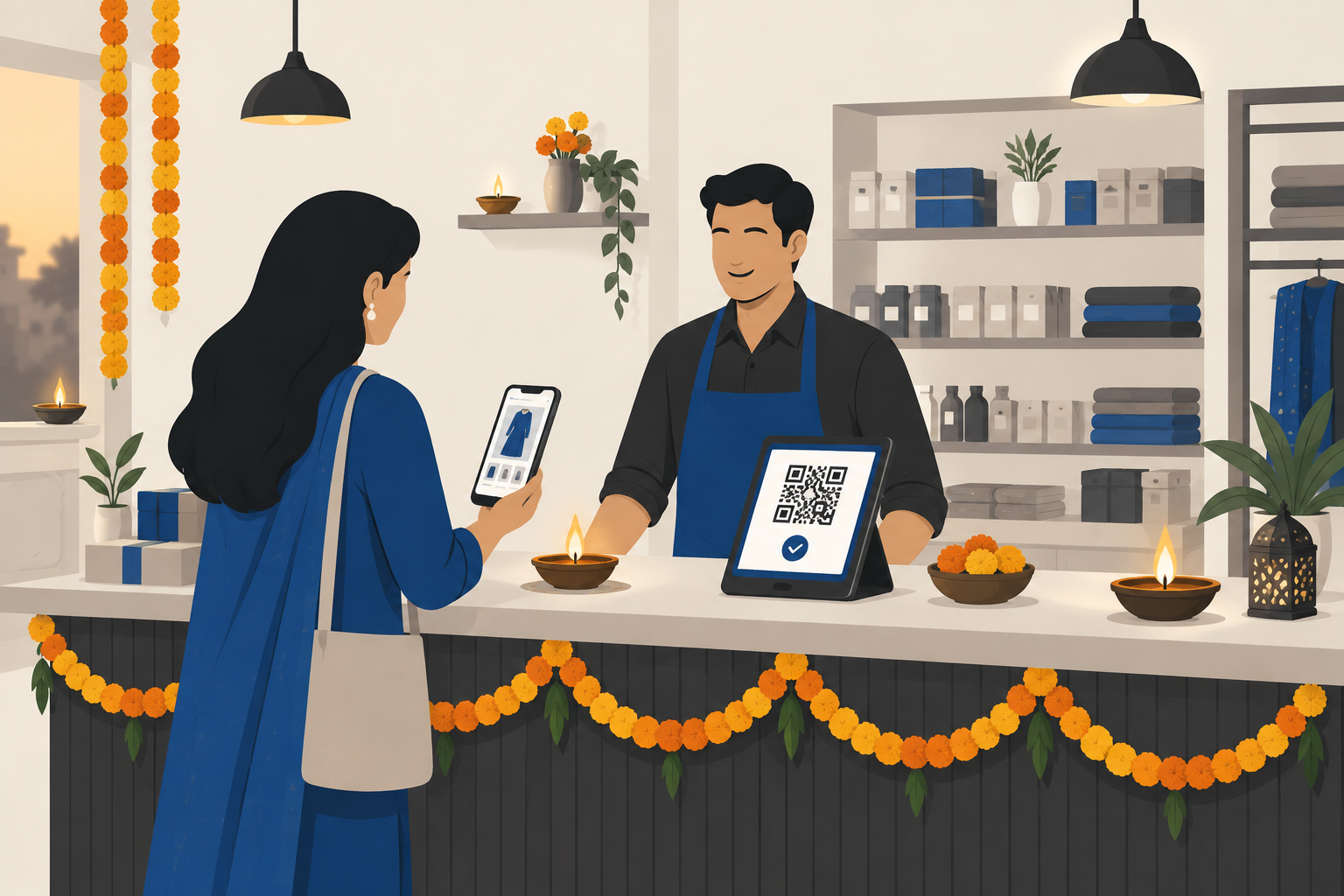
- Prepare your billing counter. Add festive products and combo packs to your billing software in advance, check your barcode printer, and train extra staff before the rush. A slow counter loses walk-in sales faster than anything online. Read how to choose billing software for your shop if your current system struggles at peak hours.
- Capture customer numbers. Every festive buyer is a customer you can invite back for the wedding season and New Year. Collect contacts (with consent) at billing and on WhatsApp.
What you can realistically build before Diwali#
Be honest about time. In two to three weeks, a small business can sensibly get:
- A refreshed Google Business Profile and festive offers page
- Speed and mobile fixes on an existing website
- WhatsApp quick replies or a simple chatbot for common questions
- A catalogue page with WhatsApp or UPI ordering
- Billing software updates and staff training
What should wait until after Diwali: a full custom ecommerce store, a mobile app, or an ERP migration. Launching complex software in the middle of peak season is how businesses end up with a broken system on their busiest day.
Five festive mistakes that cost small businesses sales#
- Old information online. Wrong timings or a closed-shop photo on Google sends customers to a competitor.
- Untested websites. A site that crashes or times out on sale day wastes every rupee spent on promotion.
- Slow replies. A customer who messages three shops will buy from the first one that answers clearly.
- Offers without end dates. Vague offers create arguments at the counter and complaints later.
- No follow-up. Festive buyers who never hear from you again are the most expensive customers you will ever lose.
Start with the one fix that matters most#
You do not need to do everything on this list. Pick the single biggest gap — for most shops it is an outdated Google listing, a slow website or unanswered WhatsApp messages — and fix that this week. Small, working improvements before Navratri beat an ambitious project that goes live after Diwali.
At Larwell Technologies in Bokaro Steel City, we help businesses across Jharkhand and India get festive-ready: website speed fixes, offers pages, WhatsApp automation, online stores and billing software. If you want help deciding what to fix first, get in touch and tell us what your customers usually ask for during the festive season.