Key takeaways
- E-invoicing is mandatory once your aggregate turnover crosses Rs 5 crore in any year since 2017-18 - below that it is optional
- Expect Rs 4,000 to Rs 15,000 a year for a single-counter shop; per-device licences add up fast, so check how billing is counted
- Offline capability matters more than feature count in Dhanbad - pick software that keeps billing when the internet drops
- Ask who owns your data and how you export it before you migrate a single item
- Barcode, inventory, and GST return filing are where the real time savings come from, not the invoice screen itself
If you are looking for a billing software company in Dhanbad, the hard part is not finding one. It is working out which of the twenty options in front of you actually fits a shop like yours, and which ones are selling you features you will never open.
Dhanbad's retail is a mix of everything - hardware and building material traders, medical stores, garment shops, kirana and wholesale, service centres, restaurants. Each has different billing needs, but the buying mistakes are remarkably consistent. This guide covers what matters in 2026.
Start with GST and e-invoicing, not features#
Before comparing screens, settle your compliance position. It narrows the field faster than any feature list.
Regular GST invoicing applies to every registered business. Your software must produce a tax invoice with your GSTIN, HSN codes, the correct tax split, and invoice numbering that does not break across a financial year. That is table stakes - any credible product does it.
E-invoicing is the one people get wrong. It becomes mandatory once your aggregate annual turnover has crossed Rs 5 crore in any financial year since 2017-18, and it applies to business-to-business and export invoices, not to direct-to-consumer billing. Most small retail shops sit outside it. Wholesale traders and distributors often do not.
Here is the practical advice: if your turnover is anywhere near that line, buy software that already supports e-invoicing. Migrating your entire item master under a compliance deadline is a miserable way to spend a fortnight.
What it actually costs#
For a single-counter shop, cloud billing software in 2026 runs roughly Rs 4,000 to Rs 15,000 per year. The spread comes from inventory depth, number of users, and whether GST return support is bundled or sold separately.
Multi-counter or multi-branch setups typically move to per-device or per-user pricing. This is where quotes get misleading. A product that looks cheap at Rs 500 a month can become Rs 2,000 a month across four counters. Always ask how a licence is counted before comparing two prices.
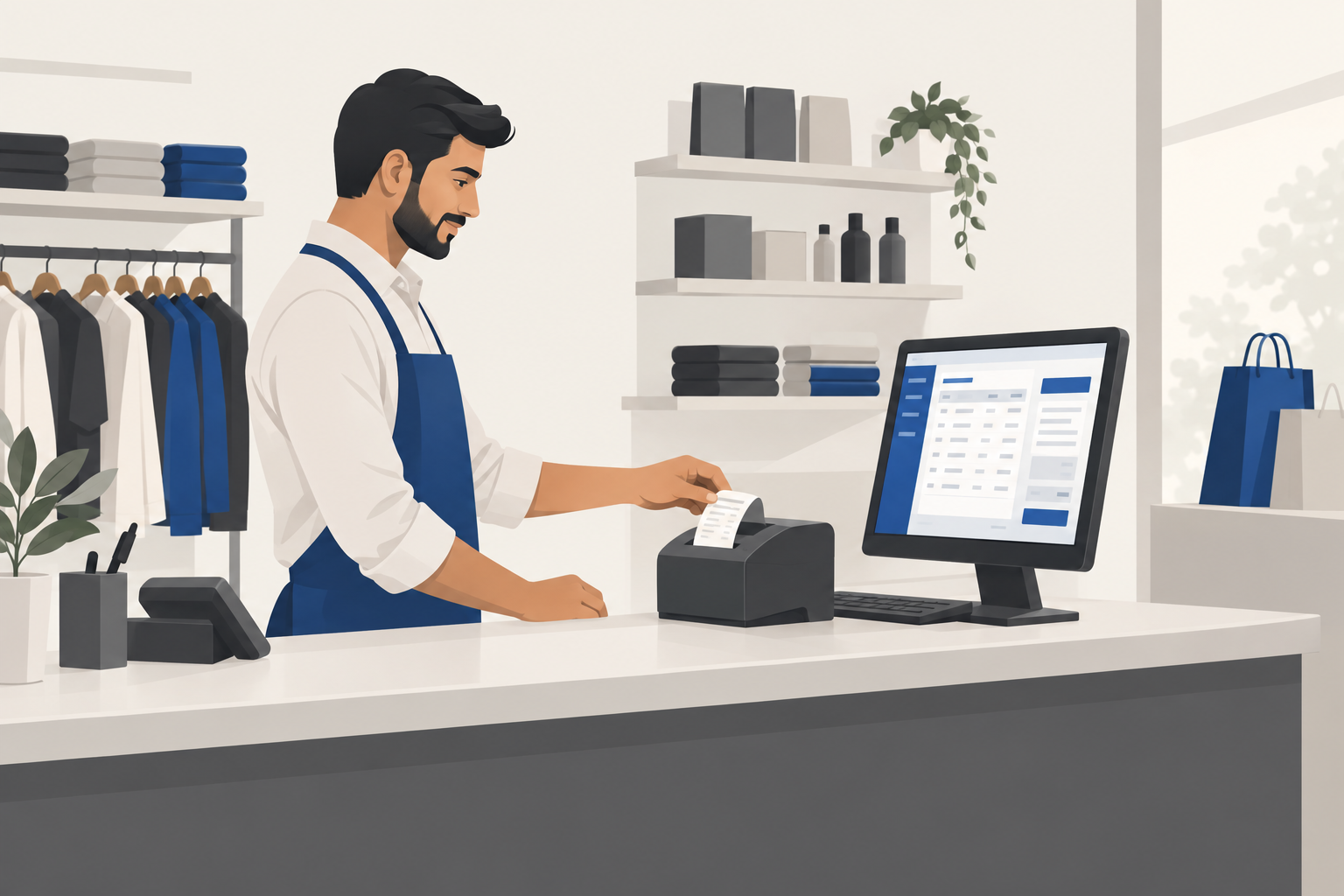
Hardware is separate. A thermal receipt printer, barcode scanner, and cash drawer together come to roughly Rs 8,000 to Rs 20,000 as a one-time cost, depending on quality. Buy decent hardware - a printer that jams during a rush costs more than it saved.
Watch for what sits outside the sticker price: data migration, staff training, annual maintenance, and charges for additional GST returns. Ask for the all-in first-year number, not the monthly headline.
Offline mode is not optional here#
This is the single most underrated requirement for shops in Dhanbad and across Jharkhand.
Power cuts happen. Broadband drops. Mobile data gets patchy inside a concrete-walled shop. If your billing software is purely cloud-based with no offline fallback, every outage becomes a queue of irritated customers and handwritten bills you will re-enter later.
Good software keeps billing locally during an outage and syncs the moment the connection returns, without duplicating invoice numbers. Test this before you buy. Ask the salesperson to switch off the wifi on their demo device and keep billing. The answer you get will be informative.
The features that genuinely save time#
Most shops use a fraction of what they pay for. These are the parts that actually earn their keep.
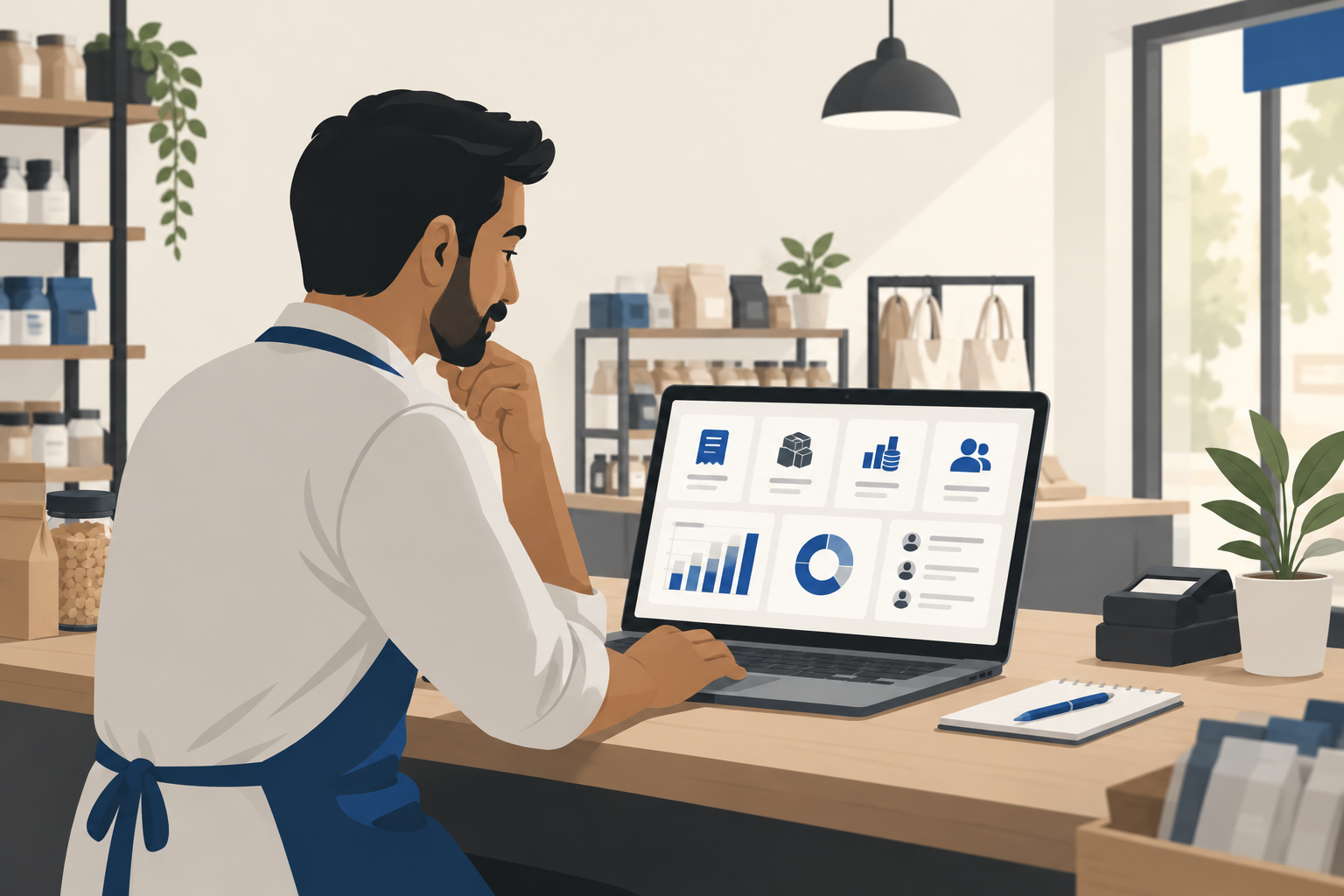
Barcode billing cuts checkout time dramatically once your item master is set up properly. The setup is the work; the payoff is permanent.
Inventory with low-stock alerts stops the two expensive failures - dead stock sitting on shelves, and running out of your fastest movers.
GST return preparation that exports directly in GSTR-1 format saves your accountant hours every month, and saves you the reconciliation arguments.
Customer ledgers and pending payment tracking matter enormously for traders selling on credit, which is most of Dhanbad's wholesale trade.
Everything beyond this - loyalty programmes, elaborate analytics dashboards, multi-currency - is worth exactly nothing until the four above are running cleanly.
Questions to ask before you pay#
Who owns the data, and how do I export it? Ask for a sample export of items, customers, and invoice history. A provider who will not show you one has told you what you need to know.
What happens when support is needed at 8 pm on a Saturday? Retail hours are not office hours. Find out the real support window.
Is training included, and for how many staff? Counter staff turnover is real. You will need to train someone again in six months.
What does year two cost? Introductory pricing that doubles on renewal is common. Get the renewal rate in writing.
Where Larwell fits#
Larwell Technologies operates from Bokaro Steel City and supports businesses across Dhanbad, Ranchi, and Jamshedpur. We offer a billing and point-of-sale platform at pos.larwell.com built for Indian retail - GST invoicing, barcode billing, inventory, and offline-capable operation.
Being an hour away rather than a timezone away matters when a counter goes down mid-rush. If you are also thinking about a website or an app alongside, our guide on choosing a website design company in Bokaro covers that decision.
A sensible way to choose#
Shortlist three products. Bill ten real transactions from your own shop on each demo, including a return and a credit sale. Check the printed invoice against what your accountant expects. Ask each for the all-in first-year cost and the year-two renewal.
The one that handles your messiest real transaction most calmly is the one to buy. Not the one with the longest feature list.